




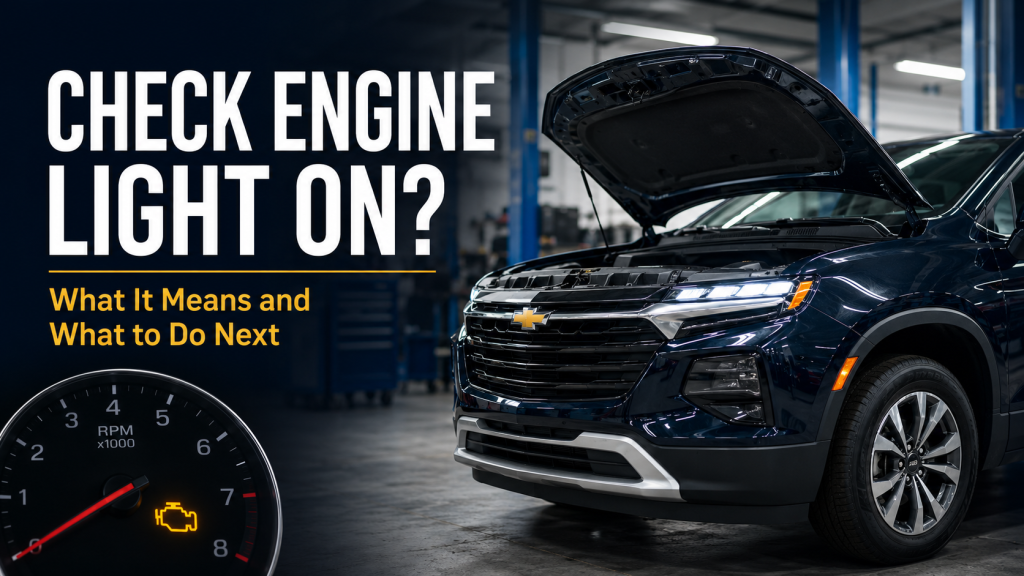
Check Engine Light On? What It Means and What to Do Next
Reviewed by the Voice Motor Sales Service Department in Kalkaska, Michigan
Few dashboard warnings get a driver’s attention quite like the check engine light. Sometimes it appears even though the vehicle seems to be running normally. Other times, it may come on along with rough running, reduced power, unusual noises, or another noticeable change.
The important thing to know is that a check engine light does not point to one specific problem. Your vehicle’s onboard diagnostic system monitors many different components and systems, and the light can be triggered for a variety of reasons.
Understanding the difference between a steady check engine light and a flashing one, knowing what symptoms to watch for, and having the vehicle properly diagnosed can help you decide what to do next.
What Does the Check Engine Light Mean?
Modern vehicles use computers, sensors, and electronic control modules to monitor engine performance, emissions-related systems, fuel delivery, ignition, airflow, and many other functions.
When the vehicle detects a problem that falls outside its expected operating range, it may store a diagnostic trouble code and turn on the check engine light.
The light itself does not tell you exactly which part needs to be replaced. Instead, it tells you that the vehicle has detected something that should be investigated.
Steady vs. Flashing Check Engine Light: What’s the Difference?
One of the first things to notice is whether the check engine light is steady or flashing.
Steady Check Engine Light
A steady check engine light generally means the vehicle has detected a fault that should be diagnosed. The vehicle may still appear to drive normally, but that does not necessarily mean the issue should be ignored.
If the light is steady and the vehicle is otherwise operating normally, check your owner’s manual and arrange to have the vehicle inspected within a reasonable amount of time.
Flashing Check Engine Light
A flashing check engine light can indicate a more serious condition that may require immediate attention.
If the light begins flashing, especially if the engine is shaking, losing power, running roughly, overheating, or making unusual noises, reduce your speed and find a safe place to stop. Continuing to drive under some conditions can result in additional damage.
Refer to your owner’s manual and contact a qualified service facility for guidance. If you are unsure whether the vehicle is safe to drive, arranging a tow may be the safer option.
Common Reasons a Check Engine Light May Come On
There are many potential causes, ranging from relatively simple issues to problems that require more extensive diagnosis or repair.
Depending on the vehicle, possible causes can involve:
- Ignition system components
- Spark plugs or ignition coils
- Fuel delivery components
- Air intake or airflow sensors
- Oxygen sensors
- Emissions-related components
- Evaporative emissions system leaks
- Engine timing or performance concerns
- Electrical or wiring issues
- Exhaust system components
On vehicles equipped with a traditional fuel cap, something as simple as a loose or damaged cap can sometimes contribute to an evaporative emissions system fault. Other causes can be considerably more complex.
That is why proper diagnosis matters before replacing parts.
Does Reading the Trouble Code Tell You Exactly What’s Wrong?
Not necessarily.
A diagnostic trouble code is an important starting point, but it does not always identify the exact component that has failed.
For example, a code associated with a particular sensor may be caused by the sensor itself, but it could also be related to wiring, a connector, an air leak, another component, or a condition elsewhere in the system.
Simply replacing the part named in a code description can sometimes result in replacing a perfectly good component without correcting the actual problem.
Professional diagnosis typically involves using the stored codes along with vehicle data, symptoms, visual inspection, testing procedures, and manufacturer service information to determine the underlying cause.
Can You Keep Driving With the Check Engine Light On?
It depends on what the vehicle is doing and why the light is illuminated.
If the check engine light is steady, the vehicle is running normally, there are no other warning lights, and there are no unusual noises, smells, vibrations, overheating, or loss of power, you may have time to arrange an inspection.
However, you should use extra caution if you notice:
- A flashing check engine light
- Engine shaking or severe vibration
- Loss of power
- Overheating
- Smoke
- Strong fuel or burning smells
- Unusual knocking or mechanical noises
- Multiple warning lights
- Difficulty starting or staying running
When these symptoms occur, continuing to drive could make the problem worse. Find a safe place to stop and contact a qualified service facility for guidance.
Why You Shouldn’t Ignore a Check Engine Light
It can be tempting to ignore the light when the vehicle seems to be driving normally, but small problems can sometimes lead to larger ones.
A condition affecting fuel mixture, ignition, emissions, or engine operation may influence fuel economy, performance, drivability, or other components if left unresolved.
Diagnosing the problem earlier can also give you more information and more options before a minor concern develops into something more expensive.
What If the Check Engine Light Turns Off by Itself?
A check engine light can sometimes turn off after the vehicle no longer detects the condition that originally triggered it.
That does not necessarily mean the problem never happened. The vehicle may retain diagnostic information that can help a technician understand what occurred.
If the light has appeared repeatedly, the vehicle has noticeable symptoms, or you are concerned about why it came on, having the system checked can still be worthwhile.
What Our Service Team Recommends
The best approach is to pay attention to both the warning light and the way the vehicle is behaving.
A check engine light should not automatically cause panic, but it also should not be treated as something to cover with a piece of tape and forget about.
Before bringing the vehicle in, make a note of anything unusual you have noticed. Helpful information can include:
- When the light first appeared
- Whether it is steady or flashing
- Whether the vehicle was cold or warmed up
- Whether the issue happens during acceleration or at idle
- Any unusual noises or smells
- Any loss of power
- Whether the vehicle is harder to start
- Whether any other warning lights appeared
- Whether the light comes and goes
Those details can help give the technician a clearer picture of what the vehicle is doing and when the problem occurs.
Check Engine Lights and Northern Michigan Driving
Vehicles in Northern Michigan experience a wide range of conditions throughout the year. Cold starts, short winter trips, temperature changes, moisture, road salt, summer heat, towing, and long-distance driving can all place different demands on a vehicle.
That makes regular maintenance and paying attention to warning lights especially important. A vehicle that operates normally during one season may begin showing symptoms as temperatures or driving conditions change.
Whether you drive primarily around Kalkaska or regularly travel toward Traverse City, Grayling, Cadillac, Lake City, Mancelona, or elsewhere in Northern Michigan, addressing warning lights early can help keep your vehicle better prepared for changing conditions.
Can Routine Maintenance Help Prevent Check Engine Lights?
Not every check engine light can be prevented, but keeping up with recommended maintenance can help reduce the likelihood of some vehicle problems.
Depending on your vehicle and its maintenance schedule, this may include:
- Regular oil and filter changes
- Air filter replacement
- Spark plug service
- Fluid inspections
- Battery and charging system checks
- Inspection of belts and hoses
- Following manufacturer-recommended maintenance intervals
Your owner’s manual is the best source for the maintenance schedule and specifications for your particular vehicle.
Schedule Check Engine Light Diagnosis at Voice Motor Sales
If your check engine light is on, the service team at Voice Motor Sales in Kalkaska can help determine why.
Our goal is to diagnose the cause of the warning rather than simply guessing which component may be responsible.
Visit our
Voice Motor Sales Service Department
to learn more about our service capabilities, or
schedule a service appointment online.
If you are unsure whether your vehicle should be driven, you can also
contact Voice Motor Sales
before your visit.
Frequently Asked Questions About Check Engine Lights
What is the most common reason for a check engine light?
There is no single cause that applies to every vehicle. A check engine light can be triggered by ignition, fuel, emissions, airflow, sensor, electrical, or other engine-management issues. Proper diagnosis is the best way to determine the actual cause.
Is a steady check engine light an emergency?
Not necessarily. A steady light generally indicates that a fault has been detected and should be diagnosed. Pay attention to how the vehicle is running and consult your owner’s manual. A flashing light or significant drivability symptoms can indicate a more urgent problem.
What should I do if my check engine light is flashing?
Reduce your speed and find a safe place to stop, particularly if the vehicle is running roughly, losing power, overheating, or showing other symptoms. Consult your owner’s manual and contact a qualified service facility. If you are unsure whether the vehicle is safe to drive, consider having it towed.
Can a loose gas cap cause a check engine light?
On vehicles equipped with a traditional fuel cap, a loose, damaged, or improperly sealed cap can sometimes cause an evaporative emissions system fault. Many newer vehicles use different fuel-filler designs, so this does not apply to every vehicle.
Can an auto parts store code scan tell me exactly what needs to be repaired?
A diagnostic code can help identify which system detected a problem, but the code does not always identify the exact failed component. Additional diagnosis may be necessary to determine the underlying cause.
Where can I get a check engine light diagnosed near Kalkaska, Michigan?
Drivers can schedule diagnostic service with the Voice Motor Sales Service Department in Kalkaska, Michigan. Voice Motor Sales serves customers throughout Kalkaska and surrounding Northern Michigan communities.

