




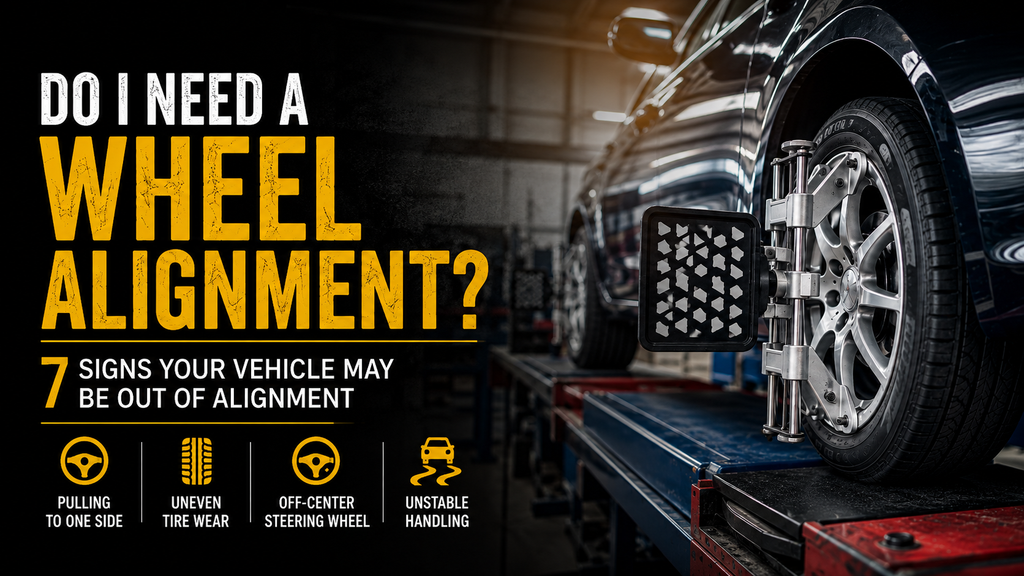
Do I Need a Wheel Alignment? 7 Signs Your Vehicle May Be Out of Alignment
Reviewed by the Voice Motor Sales Service Department in Kalkaska, Michigan
Your vehicle should feel predictable when you drive it. The steering wheel should feel centered, the vehicle should track reasonably straight, and your tires should wear evenly over time. When that starts to change, a wheel alignment problem may be one possible cause.
Alignment can be especially important for drivers in Northern Michigan, where potholes, rough pavement, gravel roads, winter conditions, and everyday wear can put additional stress on tires, steering, and suspension components.
So how do you know when your vehicle may need a wheel alignment? Here are seven common warning signs, what can cause alignment problems, and why having the vehicle inspected can help protect your tires and improve the way your vehicle drives.
What Is a Wheel Alignment?
A wheel alignment involves checking and adjusting the angles of the wheels so they are positioned according to the vehicle manufacturer’s specifications.
Alignment is commonly discussed in terms of three measurements:
- Toe: Whether the tires point slightly inward or outward when viewed from above.
- Camber: The inward or outward tilt of the wheel when viewed from the front of the vehicle.
- Caster: The angle of the steering axis, which can affect steering stability and handling.
These angles may only be off by a relatively small amount, but that can still affect tire wear, steering feel, and how the vehicle tracks down the road.
1. Your Vehicle Pulls to One Side
One of the most common signs drivers associate with an alignment problem is a vehicle that wants to drift or pull to the left or right.
If you constantly feel like you have to correct the steering to keep the vehicle traveling straight, an alignment issue may be one possibility.
However, pulling does not automatically mean the vehicle needs an alignment. Other possible causes can include:
- Uneven tire pressure
- Uneven or damaged tires
- Brake problems
- Worn steering components
- Worn suspension components
- Road surface or road crown
A proper inspection can help determine what is actually causing the vehicle to pull.
2. Your Steering Wheel Is Off-Center
When you are driving straight on a reasonably level road, the steering wheel should generally appear centered.
If the vehicle is traveling straight but the steering wheel consistently sits noticeably to the left or right, the alignment may need to be checked.
An off-center steering wheel can sometimes develop after hitting a pothole, curb, or other road hazard, or following repairs involving steering or suspension components.
3. Your Tires Are Wearing Unevenly
Uneven tire wear is one of the most important signs to watch for because an alignment problem can shorten the usable life of your tires.
Instead of wearing evenly across the tread, you may notice:
- More wear on the inside edge of a tire
- More wear on the outside edge
- Feathered or angled tread wear
- Different wear patterns between tires
Alignment is not the only possible cause of uneven tire wear. Incorrect tire pressure, worn suspension components, tire balance issues, driving habits, and lack of tire rotation can also contribute.
If you notice unusual tread wear, having the tires and related components inspected can help determine the cause before additional tire life is lost.
4. The Vehicle Feels Unstable or Wanders
A vehicle that feels like it wanders within the lane or requires frequent steering corrections may have an alignment, tire, steering, or suspension concern.
You may notice this most at highway speeds, where relatively small changes in steering behavior can become easier to feel.
Wind, road conditions, tire design, and pavement grooves can also influence how a vehicle tracks, so the symptom should be considered along with the overall condition of the vehicle.
5. You Recently Hit a Pothole or Curb
You do not always need to wait for obvious symptoms before considering an alignment inspection.
A hard impact with a pothole, curb, road edge, or other obstacle can potentially affect wheel alignment or damage a tire, wheel, steering component, or suspension component.
After a significant impact, pay attention to changes such as:
- The steering wheel sitting differently
- New vibration
- Pulling to one side
- Steering that feels different
- Visible tire or wheel damage
- New noises from the suspension
Northern Michigan’s freeze-and-thaw cycles can make potholes and rough road surfaces difficult to avoid, particularly during late winter and spring.
6. You Recently Installed New Tires
New tires do not automatically mean your vehicle needs an alignment, but it can be a good time to evaluate the vehicle’s alignment and existing tire wear patterns.
If the previous tires developed uneven wear because of an alignment issue, installing new tires without correcting the underlying problem could cause the new set to begin wearing unevenly as well.
Protecting a new set of tires is one reason it can make sense to address any known steering, suspension, or alignment concerns early.
You can learn more about tire care and replacement on our
Voice Motor Sales Tire Basics page.
7. Something Feels Different After Steering or Suspension Work
Certain steering and suspension repairs can affect wheel alignment.
Depending on the vehicle and the components involved, an alignment check may be appropriate following repairs or replacement of certain suspension or steering parts.
If the steering wheel position, vehicle tracking, or tire wear changes after a repair, let your service technician know what you are experiencing.
What Causes a Vehicle to Go Out of Alignment?
Alignment can change for several reasons. Some happen suddenly, while others develop gradually as components wear.
Possible causes include:
- Hitting potholes
- Striking a curb
- Driving frequently on rough roads
- Accident or collision damage
- Worn steering components
- Worn suspension components
- Vehicle modifications or changes in ride height
- Normal wear over time
This is also why simply adjusting alignment angles is not always the entire answer. If a steering or suspension component is worn or damaged, that condition may need to be corrected before the vehicle can maintain proper alignment.
Can Bad Alignment Ruin Your Tires?
Improper alignment can contribute to accelerated or uneven tire wear.
The longer the vehicle is driven with certain alignment problems, the more tread may be worn away from one portion of the tire. Once that rubber has been worn off, correcting the alignment cannot restore it.
That makes tire wear one of the strongest reasons not to ignore possible alignment symptoms.
Regularly checking your tire pressure and visually inspecting tread wear can help you identify a developing problem sooner.
Can a Wheel Alignment Fix Steering Wheel Vibration?
Sometimes steering symptoms occur alongside an alignment problem, but a wheel alignment is not the solution to every vibration.
Steering wheel vibration can also be related to:
- Tire balance
- Tire damage
- Bent wheels
- Brake components
- Wheel bearings
- Steering or suspension components
If the steering wheel shakes primarily while braking, the braking system may need to be inspected. Learn more on our
Brake Service page.
Describing exactly when the vibration occurs can help a technician narrow down the cause.
Wheel Alignment vs. Tire Balance: What’s the Difference?
Wheel alignment and tire balancing are two different services that address different concerns.
Wheel alignment relates to the angles and positioning of the wheels relative to the vehicle and road.
Tire balancing addresses weight distribution around the wheel and tire assembly.
A tire or wheel balance concern may cause vibration at certain speeds, while an alignment problem may be more likely to contribute to pulling, an off-center steering wheel, or abnormal tire wear.
Because some symptoms overlap, an inspection is often more useful than trying to diagnose the issue based on one symptom alone.
How Often Should You Get a Wheel Alignment?
There is no single mileage interval that applies to every vehicle and every driver.
Alignment needs can depend on the vehicle, road conditions, driving habits, tire condition, suspension wear, and whether the vehicle has experienced an impact.
Rather than relying only on a specific mileage number, it is useful to pay attention to the way the vehicle drives and how the tires are wearing.
An alignment check may be worth considering if:
- The vehicle begins pulling or wandering
- The steering wheel is no longer centered
- You notice uneven tire wear
- You hit a significant pothole or curb
- Steering or suspension components have been repaired
- You are installing new tires and the old tires showed abnormal wear
What Our Service Team Recommends
At Voice Motor Sales, we recommend looking at the entire tire, steering, and suspension system rather than assuming every pulling or tire-wear concern is automatically caused by alignment.
If you notice a change in the way your vehicle drives, make a note of exactly what you are experiencing. Helpful details include:
- Whether the vehicle pulls left or right
- Whether the steering wheel is off-center
- When the symptom first started
- Whether you recently hit a pothole or curb
- Whether the vehicle vibrates at a certain speed
- Whether vibration occurs while braking
- Where you are seeing unusual tire wear
- Whether any steering or suspension work was recently performed
The more information you can provide about when and how the symptom occurs, the easier it is to begin evaluating the underlying cause.
Wheel Alignment and Northern Michigan Roads
Northern Michigan driving can be particularly demanding on tires and suspension components.
Winter temperature changes, frost heaves, potholes, gravel roads, road construction, and rough seasonal roads can all contribute to impacts and wear over time.
Drivers around Kalkaska, Traverse City, Grayling, Cadillac, Lake City, Mancelona, and surrounding communities may encounter very different road surfaces during a normal week.
If your vehicle starts driving differently after winter, after hitting a pothole, or after traveling frequently on rough roads, checking the condition of the tires, steering, suspension, and alignment can help identify whether something has changed.
Should You Get an Alignment Before Buying New Tires?
If your existing tires show unusual or uneven wear, it is worth determining why before installing a new set.
Otherwise, an unresolved alignment, steering, suspension, or tire-pressure issue could begin affecting the replacement tires.
If your old tires wore evenly and the vehicle has no steering or handling symptoms, that does not necessarily mean an alignment adjustment will be required. The condition of the individual vehicle should determine the next step.
When Should You Have the Vehicle Inspected?
Consider having the vehicle checked if the steering or handling has noticeably changed, especially if the symptoms appeared suddenly after an impact.
Seek more immediate assistance if you notice a severe change in steering, a damaged tire or wheel, unusual suspension noises, significant vibration, or anything else that makes the vehicle feel unsafe to drive.
When you are unsure, contacting a qualified service facility before continuing to drive can help you determine the appropriate next step.
Have a Steering, Tire, or Alignment Concern? Visit Voice Motor Sales
If your vehicle is pulling to one side, your steering wheel is off-center, or your tires are wearing unevenly, the service team at Voice Motor Sales in Kalkaska can help evaluate the symptoms and determine what your vehicle may need.
Visit our
Voice Motor Sales Service Department
to learn more about vehicle maintenance and repair, or
schedule a service appointment online.
Related Vehicle Service Resources
Learn more about maintaining your tires, brakes, and vehicle at Voice Motor Sales:
Frequently Asked Questions About Wheel Alignment
How do I know if my car needs an alignment?
Possible signs include the vehicle pulling to one side, an off-center steering wheel, uneven tire wear, wandering at highway speeds, or changes in steering after hitting a pothole or curb. These symptoms can also have other causes, so an inspection may be necessary.
Can a pothole cause my vehicle to go out of alignment?
A significant pothole impact can potentially affect wheel alignment or damage tires, wheels, steering components, or suspension components. If the vehicle drives differently after hitting a pothole, it is worth having it checked.
Will an alignment stop my steering wheel from shaking?
Not necessarily. Steering wheel vibration can be caused by tire balance, damaged tires or wheels, brakes, wheel bearings, suspension components, and other issues. The timing and conditions of the vibration can help identify the cause.
Can bad alignment wear out new tires?
Improper wheel alignment can contribute to uneven or accelerated tire wear. If your previous tires showed unusual wear, determining the cause before or soon after installing new tires can help protect the replacement set.
Is wheel alignment the same as tire balancing?
No. Wheel alignment involves the angles and positioning of the wheels, while tire balancing addresses weight distribution within the wheel and tire assembly. Each can cause different driving symptoms.
Should I get an alignment after hitting a curb?
If the impact was significant or the vehicle begins pulling, vibrating, making unusual noises, or showing an off-center steering wheel afterward, an inspection is a good idea. A curb impact can potentially affect more than alignment alone.
Where can I have a steering or tire concern inspected near Kalkaska, Michigan?
Drivers can schedule an appointment with the Voice Motor Sales Service Department in Kalkaska, Michigan. Voice Motor Sales serves drivers from Kalkaska and surrounding Northern Michigan communities.

