




OEM vs. Aftermarket Auto Parts: What’s the Difference?
Whether you are repairing your own vehicle or having work completed by a professional, eventually you may need to choose a replacement part. One of the first decisions is often whether to use an OEM part or an aftermarket alternative.
Both categories can have a place in vehicle repair, but they are not the same. Understanding the differences can make it easier to choose the right part for your vehicle, your repair, and your budget.
What Does OEM Mean?
OEM stands for Original Equipment Manufacturer. An OEM replacement part is designed to meet specifications established for the vehicle manufacturer.
For Chevrolet owners, GM Genuine Parts and certain ACDelco products provide replacement-part options designed for GM vehicles and applications.
What Is an Aftermarket Part?
An aftermarket part is manufactured by a company other than the vehicle’s original manufacturer or its designated original-equipment supplier.
The aftermarket is enormous, so quality, design, fit, price, features, and warranty coverage can vary significantly from one manufacturer and product line to another.
1. Fit and Compatibility
One advantage of choosing a part intended specifically for your vehicle is compatibility. Modern vehicles contain increasingly complex mechanical and electronic systems, and even seemingly simple parts can vary by engine, trim, drivetrain, production date, or option package.
Using the vehicle identification number, or VIN, can help a parts professional determine which component is appropriate for a particular vehicle.
2. Quality and Specifications
OEM and manufacturer-supported replacement parts are designed around the specifications of the vehicle application.
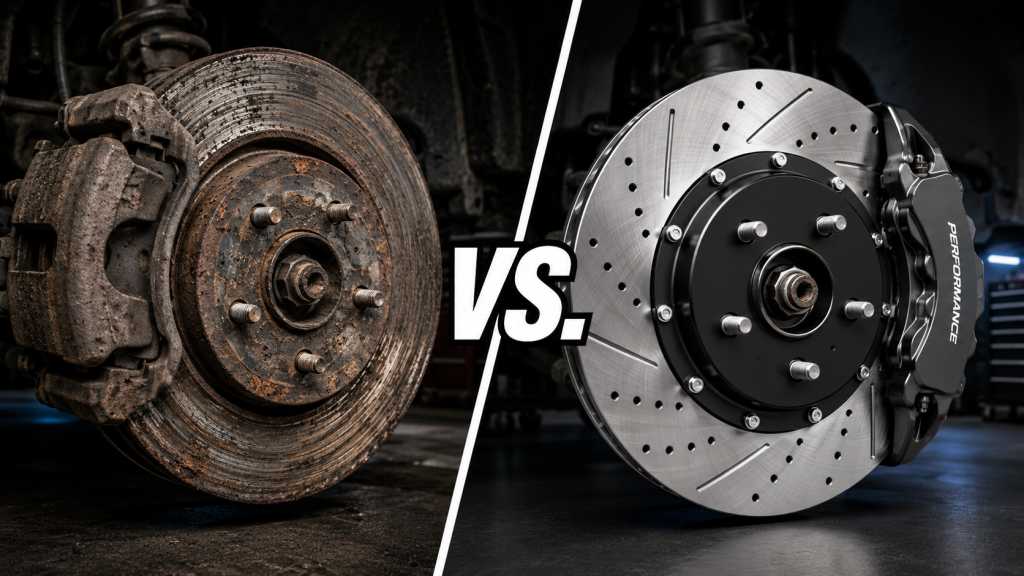
Aftermarket parts range from economical replacements to premium or specialized products. Some may be designed differently from the original component, which can be useful in certain situations but also makes selecting a reputable brand and correct application important.
3. Price
Price is one reason drivers consider aftermarket parts. Depending on the component and manufacturer, aftermarket alternatives may cost less than an original-equipment option.
However, purchase price should not always be the only consideration. Fit, durability, warranty coverage, installation time, and whether a part needs to be replaced again can all affect the total cost of a repair.
4. Warranty Considerations
Warranty coverage varies by part, manufacturer, and repair. Before purchasing a replacement component, ask what warranty applies to the part and whether any requirements apply to installation or coverage.
If your vehicle is still covered by a factory, extended, or parts warranty, it is also worth confirming whether the repair has any specific parts requirements.
5. Electronics and Vehicle Technology
Today’s vehicles use cameras, sensors, control modules, driver-assistance systems, and networked electronics throughout the vehicle.
When replacing components associated with these systems, correct specifications and compatibility become particularly important. The right part may also need programming, calibration, or installation procedures specific to the vehicle.
When Does Choosing an OEM Part Make Sense?
An OEM or manufacturer-supported part can be a strong choice when maintaining original specifications and vehicle compatibility are priorities.
They may be particularly appealing for newer vehicles, warranty-related repairs, electronic components, sensors, body components, and repairs where exact fitment is important.
When Might an Aftermarket Part Make Sense?
Aftermarket parts can make sense in many situations as well. Owners of older vehicles may want a more economical replacement, while enthusiasts may look for specialized aftermarket components that change appearance or performance.
The key is choosing the correct component from a reputable manufacturer rather than assuming every aftermarket part is identical.
How Do I Know Which Part Fits My Vehicle?
Year, make, and model are a good starting point, but sometimes they are not enough. Vehicles within the same model year can use different components depending on engine, transmission, drivetrain, trim, production date, and optional equipment.
Providing your VIN is one of the easiest ways to help a parts professional identify the correct application.
Order Chevrolet Parts from Voice Motor Sales
If you need a replacement part for your Chevrolet, the Parts Department at Voice Motor Sales Chevrolet can help identify the proper component for your vehicle.
Whether you need brake components, filters, wiper blades, maintenance items, or another replacement part, start by
ordering parts online from Voice Motor Sales Chevrolet.
If you would rather have the part installed for you, visit our
Service Department
or
schedule a service appointment online.
Frequently Asked Questions
What does OEM stand for?
OEM stands for Original Equipment Manufacturer and generally refers to parts designed to meet the original manufacturer’s specifications for a particular vehicle application.
Are aftermarket parts always lower quality?
No. Aftermarket quality varies considerably. There are economy, standard, premium, and specialized aftermarket products from many different manufacturers.
Why is my VIN helpful when ordering parts?
A VIN helps identify the exact vehicle configuration and can make it easier to select the correct component when multiple parts were used within the same model or model year.
Where can I order Chevrolet parts near Kalkaska, MI?
You can order Chevrolet parts through the Parts Department at Voice Motor Sales Chevrolet in Kalkaska using the dealership’s online parts request form.

