



Blog

7 Things to Consider Before Buying a New Car, Truck, or SUV

7 Things to Consider Before Buying a New Car, Truck, or SUV

Shopping for a new vehicle should be exciting, but with so many models, features, powertrains, and options available, it can also feel like a lot to consider.

The best new vehicle is not necessarily the one with the longest feature list or the biggest engine. It is the one that fits your daily driving, your passengers, your budget, and what you expect to need in the years ahead.

Before you start comparing vehicles, here are seven things worth considering to help narrow down your choices.

1. Think About How You Actually Use Your Vehicle

Start with your normal routine. How many people do you usually carry? How far is your commute? Do you regularly haul cargo, tow a trailer, travel long distances, or drive on rough roads?

Your answers can help determine whether a car, SUV, crossover, or pickup makes the most sense.

A compact vehicle may be ideal for commuting and everyday errands, while a larger SUV may make more sense for a growing family. Drivers who regularly tow, haul, or use their vehicle for work may benefit from the capability of a pickup truck.

Thinking about how you will use the vehicle most of the time can keep you from paying for capability you do not need—or wishing later that you had chosen something more capable.

2. Consider Passenger and Cargo Space

A vehicle can look spacious from the outside but feel very different once everyone is seated and the cargo area is loaded.

Consider how often you carry passengers and what you regularly bring along. Families may want to think about car seats, sports equipment, groceries, luggage, pets, and other everyday cargo.

If you are considering an SUV, look at both passenger space and usable cargo room. If you are shopping for a truck, think about cab configuration, bed length, storage, and how often the rear seats will be used.

A test drive is also a good opportunity to sit in every seating position and make sure the vehicle works for more than just the driver.

3. Decide How Much Capability You Really Need

If towing or hauling is part of your lifestyle, make capability one of your first considerations instead of an afterthought.

Think about what you plan to tow or carry, how frequently you will do it, and whether your needs may change in the future.

Towing and payload capacity can vary significantly depending on engine, drivetrain, cab configuration, equipment, and optional packages. If capability is important to you, confirm the specifications of the exact vehicle you are considering.

Choosing the right configuration from the beginning can make a big difference in how useful the vehicle is over time.

4. Compare the Features You Will Actually Use

Today's new vehicles can offer a wide range of comfort, convenience, connectivity, and driver-assistance features.

Depending on the vehicle and trim, shoppers may find features such as:

  • Apple CarPlay and Android Auto
  • Large touchscreen displays
  • Wireless phone charging
  • Remote start
  • Heated and ventilated seats
  • Heated steering wheel
  • Adaptive cruise control
  • Parking cameras and assistance features
  • Blind-zone monitoring
  • Automatic emergency braking
  • Power liftgates
  • Trailering technology

Instead of automatically choosing the highest trim level, make a short list of the features that matter most to you. You may find that a mid-level trim provides everything you want without adding equipment you are unlikely to use.

5. Look Beyond the Monthly Payment

Monthly payment is important, but it should not be the only number you consider when comparing new vehicles.

Look at the overall purchase price, available financing or lease terms, estimated fuel costs, insurance, maintenance, and how long you plan to keep the vehicle.

If you have a trade-in, its value and any remaining loan balance can also affect your purchase.

Taking a broader look at the transaction can help you compare different vehicles more accurately and choose an option that fits your overall budget.

6. Find Out What Your Current Vehicle Is Worth

If you plan to trade your current vehicle, knowing its approximate value before you shop can make planning easier.

Mileage, condition, equipment, vehicle history, market demand, and other factors can all influence trade value.

You can begin the process online using the
Voice Motor Sales Trade Appraisal Tool.

If you still owe money on your current vehicle, that does not necessarily prevent you from trading it. The payoff amount can be reviewed along with the vehicle's appraised value when discussing your options.

7. Always Take a Test Drive

Specifications and photos can help narrow down your choices, but a test drive can tell you things that are difficult to learn online.

During the drive, pay attention to:

  • Seat comfort
  • Visibility
  • Ride quality
  • Acceleration
  • Braking feel
  • Steering
  • Cabin noise
  • Control placement
  • Infotainment system usability
  • Ease of getting in and out

If you are comparing two different models or trims, driving them back-to-back can make the differences much easier to recognize.

New Vehicle vs. Used Vehicle: Which Is Right for You?

Buying new offers several advantages. You are the vehicle's first owner, you know its history from day one, and you can choose from current designs, technology, safety features, colors, trims, and available equipment.

New vehicles may also have manufacturer financing, lease, or incentive programs available from time to time. Availability and eligibility can vary, so it is important to review the details of any current offer.

A pre-owned vehicle can still be the better choice for some shoppers, particularly when purchase price is the main priority. The right answer depends on your individual needs and budget.

Should You Finance or Lease a New Vehicle?

Financing and leasing can both make sense depending on how you plan to use your vehicle.

Financing may appeal to drivers who want to own the vehicle, drive it for many years, customize it, or avoid mileage limitations.

Leasing may appeal to drivers who prefer changing vehicles more frequently and like driving a newer vehicle on a regular cycle. Lease mileage limits, wear requirements, terms, and other conditions should be considered before deciding.

You can begin exploring financing options through our
online pre-approval form.
Financing and lease availability, rates, terms, and approval are subject to applicable lender requirements and credit approval.

Do Not Forget About the Vehicle You May Need Three Years From Now

One of the easiest mistakes when buying a vehicle is choosing only for today's needs.

Think a few years ahead. Could your family grow? Are you planning to buy a camper or trailer? Could your commute change? Do you expect to need more cargo room? Will a teenager eventually be driving the vehicle?

You cannot predict everything, but thinking ahead can help you choose a vehicle that continues to work for you long after the excitement of buying it has worn off.

Shop New Vehicles at Voice Motor Sales Chevrolet

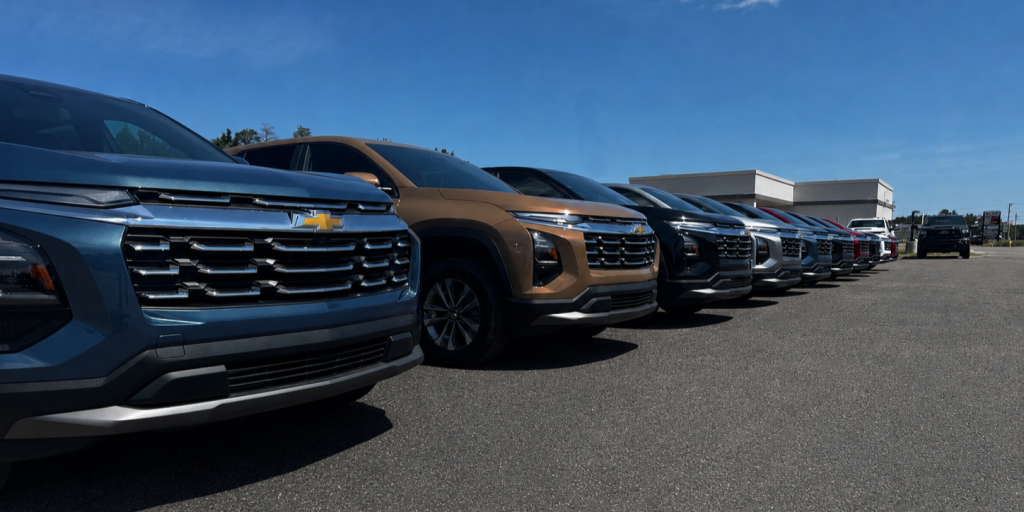
If you are starting your search for a new car, truck, or SUV, the team at Voice Motor Sales Chevrolet in Kalkaska can help you compare vehicles, trims, features, and available options.

Start by
browsing our current new Chevrolet inventory,
use our
trade appraisal tool
to learn more about your current vehicle, or
contact Voice Motor Sales Chevrolet
with questions.

Once you find a vehicle that interests you, schedule a test drive and see how it fits your needs in person.

Frequently Asked Questions

What should I consider before buying a new vehicle?

Consider how you will use the vehicle, passenger and cargo needs, towing or hauling requirements, features, overall budget, trade-in value, and how long you expect to keep the vehicle.

Should I test drive a new vehicle before buying it?

Yes. A test drive gives you an opportunity to evaluate comfort, visibility, ride quality, acceleration, braking, controls, technology, and overall driving feel before making a decision.

Should I find out my trade value before shopping for a new vehicle?

Knowing your vehicle's approximate trade value can make it easier to understand your options and plan your overall vehicle purchase.

Is it better to finance or lease a new vehicle?

It depends on your driving habits, budget, ownership goals, expected mileage, and how frequently you prefer to replace your vehicle. Financing and leasing each have different advantages and conditions.

Where can I shop for a new Chevrolet near Kalkaska, Michigan?

Drivers can browse current new Chevrolet inventory at Voice Motor Sales Chevrolet in Kalkaska, Michigan, and contact the dealership to confirm current vehicle availability, options, and pricing.
7 Things to Consider Before Buying a New Vehicle | Voice Motor Sales

Recommended Posts

Chevy Silverado 1500 vs. 2500 HD vs. 3500 HD

2026 Chevy Silverado 1500 vs. 2500 HD vs. 3500 HD: Which Truck Do You Need?

2026 Chevy Silverado 1500 vs. 2500 HD vs. 3500 HD: Which Truck Do You Need? Reviewed by the Voice Motor Sales Sales Department in Kalkaska, Michigan If you know you want a Chevrolet Silverado but are trying to decide between a Silverado 1500, Silverado 2500 HD, and Silverado 3500 HD, the most important question is not simply which truck is bigger. The better question is: What do you actually need your truck to do? For many drivers, the Silverado 1500 provides plenty of capability while remaining comfortable and practical for everyday use. The Silverado 2500 HD moves into serious heavy-duty towing and hauling territory. The Silverado 3500 HD goes farther, offering substantially greater payload capability and available dual rear wheels for some of Chevrolet's heaviest towing applications. The right choice depends on what you tow, how much weight you carry in the truck, how often you tow, and how much heavy-duty capability you really need. Here is a closer look at the 2026 Chevrolet Silverado 1500 vs. 2500 HD vs. 3500 HD and where each truck fits. Silverado 1500 vs. 2500 HD vs. 3500 HD at a Glance 2026 Chevrolet Silverado Capability Comparison Specification Silverado 1500 Silverado 2500 HD Silverado 3500 HD Truck Class Light-Duty / Half-Ton Heavy-Duty / Three-Quarter-Ton Heavy-Duty / One-Ton Max Available Towing 13,300 lbs. 22,420 lbs. 36,000 lbs. Max Available Payload 2,260 lbs. 4,101 lbs. 7,237 lbs. Gas Engine Choices TurboMax, 5.3L V8, 6.2L V8 6.6L V8 6.6L V8 Diesel Engine 3.0L Duramax Turbo-Diesel 6.6L Duramax Turbo-Diesel V8 6.6L Duramax Turbo-Diesel V8 Dual Rear Wheels Available No No Yes Typical Focus Everyday use, moderate towing and hauling Heavy towing and hauling Maximum towing, payload and heavy-duty work Maximum ratings require specific configurations and equipment. The towing and payload capacity of an individual truck may be considerably different from the maximum figures shown above. Always verify the ratings of the specific truck and trailer before towing. What Do 1500, 2500, and 3500 Actually Mean? Silverado's 1500, 2500, and 3500 designations identify different levels of truck capability. They are commonly associated with traditional truck classifications: Silverado 1500: commonly called a half-ton pickup Silverado 2500 HD: commonly called a three-quarter-ton pickup Silverado 3500 HD: commonly called a one-ton pickup Those names are historical classifications. They do not mean that a Silverado 1500 can only carry 1,000 pounds or a Silverado 3500 can only carry 2,000 pounds. Modern trucks can carry considerably more than those old classifications suggest. 2026 Silverado 1500: The Everyday Full-Size Pickup The Silverado 1500 is Chevrolet's light-duty full-size pickup and will provide all the truck many drivers ever need. It combines significant towing and payload capability with a wider range of engine choices and the everyday driving characteristics many people want from a personal vehicle. Chevrolet lists a maximum available towing capacity of 13,300 pounds and maximum available payload of 2,260 pounds for the 2026 Silverado 1500 when properly configured. 2026 Silverado 1500 Engine Choices One advantage of the Silverado 1500 is the variety of available powertrains. TurboMax 310 horsepower 430 lb.-ft. of torque 8-speed automatic transmission 5.3L EcoTec3 V8 355 horsepower 383 lb.-ft. of torque 10-speed automatic transmission 6.2L EcoTec3 V8 420 horsepower 460 lb.-ft. of torque 10-speed automatic transmission 3.0L Duramax Turbo-Diesel 305 horsepower 495 lb.-ft. of torque 10-speed automatic transmission Available towing capability up to 13,300 pounds when properly equipped Who Should Consider a Silverado 1500? A Silverado 1500 may make sense for someone who uses a truck as both an everyday vehicle and a tow or work vehicle. Typical uses might include: Daily commuting Home improvement projects Hauling ATVs or side-by-sides Pulling many boats Pulling utility trailers Towing appropriately sized travel trailers Carrying recreational equipment Property maintenance Light commercial work The important qualifier is trailer weight. A boat, camper, or equipment trailer can range dramatically in size and loaded weight, so the actual truck configuration still needs to be matched to the specific trailer. Why Choose a 1500 Instead of an HD? More capability is not automatically better if you do not need it. Compared with an HD truck, a Silverado 1500 can offer advantages for someone who spends most of their time driving without a heavy trailer. Depending on configuration, those advantages can include: Easier everyday maneuverability More powertrain choices Potentially better fuel economy A more everyday-oriented ride More than enough towing capability for many recreational trailers If your loaded trailer comfortably fits within the truck's ratings and you do not need HD-level payload, moving to a 2500 or 3500 solely because it is larger may not be necessary. 2026 Silverado 2500 HD: The Step Into Heavy-Duty Capability Silverado 2500 HD is where the lineup makes a major jump in towing, payload, engine size, chassis capability, and overall heavy-duty construction. Chevrolet lists a maximum available towing capacity of 22,420 pounds for the 2026 Silverado 2500 HD. Maximum available payload increases to 4,101 pounds. That difference is why the 2500 HD becomes particularly important for drivers towing larger campers, heavy equipment trailers, larger enclosed trailers, and other loads that can begin to push beyond the practical limits of a light-duty pickup. 2026 Silverado 2500 HD Engine Choices Rather than the four-engine lineup found in the 1500, Silverado HD focuses on two 6.6-liter V8 powertrains. 6.6L Gas V8 401 horsepower 464 lb.-ft. of torque 10-speed Allison automatic transmission 6.6L Duramax Turbo-Diesel V8 470 horsepower 975 lb.-ft. of torque 10-speed Allison automatic transmission Both engines provide substantially different characteristics from the light-duty Silverado powertrain lineup. Gas vs. Diesel in a Silverado 2500 HD Choosing between the 6.6L gasoline V8 and Duramax diesel deserves its own consideration. The gas engine can be attractive to owners who want HD chassis and payload capability without necessarily needing maximum diesel torque. The Duramax may be particularly appealing to drivers who frequently tow heavier trailers, travel long distances with a trailer, or want the HD lineup's highest available torque. Diesel also adds purchase cost and changes maintenance and operating considerations, so engine selection should be based on how the truck will actually be used rather than simply choosing the engine with the larger torque number. Who Should Consider a Silverado 2500 HD? Silverado 2500 HD becomes especially relevant when towing and payload are regular parts of the truck's job. Possible uses include: Larger travel trailers Some fifth-wheel trailers Heavy equipment trailers Construction trailers Farm use Commercial work Snow and property-management equipment Heavy loads in the bed Frequent long-distance towing Again, the specific loaded trailer weight and the exact truck ratings should determine whether a particular 2500 HD configuration is appropriate. 2026 Silverado 3500 HD: Maximum Silverado Pickup Capability The Silverado 3500 HD takes the basic heavy-duty formula another step. Chevrolet lists maximum available towing of 36,000 pounds and maximum available payload of 7,237 pounds for the 2026 Silverado 3500 HD when properly configured. The 3500 HD is also the Silverado model that introduces an important additional option: dual rear wheels. What Is a Dually? A dual-rear-wheel truck, commonly called a dually, has two rear tires on each side instead of one. A 3500 HD can be configured as either: SRW: Single rear wheel DRW: Dual rear wheel Dual rear wheels allow certain 3500 HD configurations to handle substantially greater rear-axle and payload demands, which becomes especially important with heavy gooseneck and fifth-wheel trailers. The tradeoff is that a dually is wider and is generally more truck than a driver needs if heavy payload and towing are not part of its regular job. 2500 vs. 3500: What's the Real Difference? This is often the harder comparison. The Silverado 2500 HD and 3500 HD offer the same two primary engines: 6.6L gasoline V8 6.6L Duramax Turbo-Diesel V8 So moving from a 2500 to a 3500 does not necessarily mean moving to a more powerful engine. The major difference is the truck's ability to support more weight. The 3500 HD can offer: Higher GVWR depending on configuration Higher maximum payload Greater maximum towing capability Available dual rear wheels Greater capability for high trailer pin or tongue weight That last point is particularly important. Don't Compare Trucks Using Towing Capacity Alone Maximum towing capacity gets most of the attention in truck advertising, but it is not the only number that matters. In some situations, payload capacity can be the limiting factor before maximum trailer weight is reached. Payload can include weight from: Driver Passengers Cargo in the cab Cargo in the bed Accessories Trailer tongue weight or pin weight That is why two trucks that can both technically pull a particular trailer may not have the same ability to carry everything associated with that trailer. Why Payload Matters With a Fifth-Wheel Camper Fifth-wheel trailers are a good example. A portion of the trailer's weight is supported directly by the truck through the hitch mounted in the bed. That weight counts against the truck's available payload. Once passengers, a hitch, tools, cargo, and other equipment are added, a truck can approach its payload rating even when the trailer itself is technically below the truck's advertised maximum towing capacity. This is one of the main reasons someone shopping for a large fifth-wheel camper may end up comparing a 2500 HD with a 3500 HD rather than looking only at maximum tow ratings. Silverado 1500 vs. 2500 for Towing The choice between a 1500 and 2500 often comes down to how heavy the trailer is and how frequently you tow it. Silverado 1500 offers up to: 13,300 pounds maximum available towing 2,260 pounds maximum available payload Silverado 2500 HD increases those maximums to: 22,420 pounds maximum available towing 4,101 pounds maximum available payload That is a substantial step. If your trailer falls comfortably within a properly equipped Silverado 1500's ratings, the 1500 may provide the capability you need without moving into an HD truck. If your trailer or payload begins approaching light-duty limits—or if heavy towing will be a frequent part of the truck's life—the 2500 HD deserves serious consideration. Silverado 2500 vs. 3500 for Towing Moving from the 2500 HD to the 3500 HD becomes increasingly important as trailer and payload requirements grow. Maximum available ratings are: 2500 HD: up to 22,420 pounds towing and 4,101 pounds payload 3500 HD: up to 36,000 pounds towing and 7,237 pounds payload For a shopper considering a large fifth-wheel, gooseneck, commercial trailer, or heavy in-bed load, that increase in payload can be just as important as the higher towing number. Do You Need a 3500 if You Don't Want a Dually? Not necessarily—but it is worth knowing that the 3500 HD is also available in single-rear-wheel configurations. Someone may choose a single-rear-wheel 3500 HD because they need more payload or GVWR than an otherwise similar 2500 HD can provide without needing the width or maximum capacity of a dually. The exact ratings of the trucks you are comparing become especially important here because cab, bed, drivetrain, engine, trim, and equipment can all affect the final numbers. Which Silverado Is Better for Everyday Driving? If towing and payload requirements do not dictate an HD truck, the Silverado 1500 is typically the more everyday-oriented choice. It is designed to balance truck capability with commuting, family use, recreational driving, and general transportation. Silverado 2500 HD and 3500 HD are physically larger, heavier-duty vehicles designed around greater workloads. That extra capability can be extremely valuable when you need it—but it should serve a purpose. Which Silverado Is Better for a Camper? It depends entirely on the camper. "Camper" can describe anything from a relatively light travel trailer to an extremely large fifth-wheel. When shopping for a truck to tow a camper, determine: The camper's loaded weight Its tongue or pin weight The weight of your hitch The number of passengers Cargo carried in the truck Whether you expect to add equipment later Then compare those figures with the ratings of the exact truck. Do not choose a tow vehicle based only on the trailer's advertised dry weight. Which Silverado Is Better for Towing a Boat? Boat trailers also vary enormously. Many recreational boats can fall comfortably within Silverado 1500 capability, while larger boats and trailers may make an HD truck more appropriate. Remember to consider the complete loaded trailer weight, including: Boat Trailer Fuel Batteries Fishing equipment Coolers Other gear carried aboard Which Silverado Is Better for Work? All three can be work trucks. The difference is the type of work. Silverado 1500 Can be a strong choice for trades, property maintenance, general contracting, sales, site visits, and jobs that require a truck without continuously carrying extremely heavy loads. Silverado 2500 HD Becomes attractive when heavier trailers, equipment, tools, payload, or frequent towing are normal parts of the job. Silverado 3500 HD Is designed for users whose work demands maximum pickup-level payload and towing capability, including certain agriculture, construction, equipment, and commercial applications. 1500 vs. 2500 vs. 3500 for Northern Michigan Silverado owners throughout Northern Michigan use their trucks in very different ways. Around Kalkaska, Traverse City, Grayling, Cadillac, Lake City, Mancelona, and surrounding communities, that can include: Towing boats Pulling campers Moving ATVs and side-by-sides Hauling firewood Property maintenance Construction work Agricultural use Pulling equipment trailers Snow removal Long-distance recreational towing A Silverado 1500 may be ideal for someone pulling a recreational trailer on the weekends while using the truck every day. Someone regularly hauling equipment or towing a larger camper may benefit from the additional capability of a 2500 HD. A buyer pulling a large fifth-wheel or gooseneck trailer with substantial pin weight may need the higher payload and available dual-rear-wheel capability of a 3500 HD. Should You Buy More Truck Than You Currently Need? Some additional capacity can be useful, particularly if you expect your trailer or workload to grow in the future. But there is also little reason to buy significantly more truck than your actual needs require. The goal is to have sufficient capacity for your real loaded trailer and payload while still choosing a truck that works well for the rest of your driving. Use the Door-Jamb Payload Label Advertised maximum ratings are useful for comparing truck families, but the most important numbers belong to the specific truck you are buying. Payload varies based on equipment and configuration. Adding options and equipment adds vehicle weight, which can change how much capacity remains for passengers, cargo, and trailer weight. Check the certification and payload labels on the actual vehicle and review Chevrolet's trailering information before towing. Don't Forget Trailer Weight After Loading Another common mistake is comparing a truck's towing rating with an empty trailer weight. Once a trailer is loaded with: Water Fuel Food Tools Camping equipment ATVs or recreational vehicles Construction materials Other cargo its actual weight can be substantially different. Match the truck to the trailer as it will actually be used. Quick Guide: Which Silverado Should You Look At? Start With a Silverado 1500 If: You want a truck that will also be an everyday vehicle Your towing needs fit comfortably within a properly equipped 1500's ratings You want the widest selection of engine choices You tow recreationally rather than routinely pulling extremely heavy loads You do not need heavy-duty payload capacity Move Up to a Silverado 2500 HD If: Your trailer is too heavy for the 1500 configuration you are considering You need substantially more payload You tow heavy loads regularly You want the available 6.6L Duramax diesel You use the truck for demanding work or recreational towing Consider a Silverado 3500 HD If: You need more payload than a 2500 HD provides You pull a large fifth-wheel or gooseneck trailer High pin weight is an important consideration You need maximum Silverado pickup towing capability You need or want a dual-rear-wheel configuration Your commercial or recreational workload requires one-ton capability What Our Sales Team Recommends At Voice Motor Sales, we recommend starting with the trailer and workload instead of starting with the truck badge. Before deciding between a Silverado 1500, 2500 HD, and 3500 HD, determine: What are you towing? What is its actual loaded weight? What is the tongue or pin weight? How many people will normally be in the truck? How much cargo will you carry? How frequently will you tow? Will your trailer get larger in the future? Do you want gasoline or diesel? Will the truck also be your everyday vehicle? Once those questions are answered, choosing between a 1500, 2500, and 3500 becomes much easier. Shop Chevrolet Silverado Trucks at Voice Motor Sales If you are comparing Silverado 1500, 2500 HD, and 3500 HD trucks in Northern Michigan, the team at Voice Motor Sales in Kalkaska can help you compare configurations based on how you actually plan to use the truck. You can browse current new Chevrolet inventory or contact Voice Motor Sales with questions about a specific Silverado. If you have a vehicle to trade, you can also begin with our online trade appraisal. Financing information is available through the Voice Motor Sales Finance Department. Looking Ahead to the Next-Generation Silverado 1500 Chevrolet has also announced a redesigned next-generation Silverado 1500 for the 2027 model year, including new 5.7L and 6.6L naturally aspirated V8 engines. If you are comparing buying a current truck with waiting for the next generation, read: 2027 Chevy Silverado 1500 Preview: Confirmed Trims, Engines, Redesign, and New Features 2027 Chevy Silverado 5.7L and 6.6L V8 Engines: What We Know So Far Frequently Asked Questions: Silverado 1500 vs. 2500 vs. 3500 What is the difference between a Silverado 1500 and 2500 HD? Silverado 1500 is Chevrolet's light-duty full-size pickup, while Silverado 2500 HD uses a heavier-duty chassis and substantially increases available towing and payload capability. For 2026, Chevrolet lists maximum available towing of 13,300 pounds for Silverado 1500 and 22,420 pounds for Silverado 2500 HD. What is the difference between a Silverado 2500 and 3500? Both trucks offer 6.6L gas and available 6.6L Duramax diesel V8 engines, but the Silverado 3500 HD can provide substantially higher payload and towing capacity. The 3500 HD is also available with dual rear wheels. How much can a 2026 Silverado 1500 tow? The 2026 Chevrolet Silverado 1500 offers up to 13,300 pounds of maximum available towing capacity when properly equipped. Actual capacity depends on engine, drivetrain, cab, bed, equipment, passengers, cargo, and other factors. How much can a 2026 Silverado 2500 HD tow? Chevrolet lists maximum available towing of up to 22,420 pounds for the 2026 Silverado 2500 HD when properly configured. How much can a 2026 Silverado 3500 HD tow? The 2026 Silverado 3500 HD offers maximum available towing of up to 36,000 pounds when properly configured. How much payload can a Silverado 1500 carry? Chevrolet lists maximum available payload of up to 2,260 pounds for the 2026 Silverado 1500. The exact payload of an individual truck varies by configuration and equipment. How much payload can a Silverado 2500 HD carry? The 2026 Silverado 2500 HD offers up to 4,101 pounds of maximum available payload depending on configuration. How much payload can a Silverado 3500 HD carry? The 2026 Silverado 3500 HD offers up to 7,237 pounds of maximum available payload depending on configuration. Do the Silverado 2500 and 3500 have the same engines? The 2026 Silverado 2500 HD and 3500 HD both offer a 6.6L gasoline V8 rated at 401 horsepower and 464 lb.-ft. of torque and an available 6.6L Duramax Turbo-Diesel V8 rated at 470 horsepower and 975 lb.-ft. of torque. Do I need a 2500 to tow a camper? Not necessarily. Many campers can be towed by a properly equipped Silverado 1500, while larger and heavier trailers may require a 2500 HD or 3500 HD. Use the camper's actual loaded weight, tongue or pin weight, and the ratings of the specific truck to determine what is required. Do I need a 3500 for a fifth-wheel camper? Not every fifth-wheel requires a 3500 HD, but payload and pin weight become especially important with larger fifth-wheel trailers. A 3500 HD may provide considerably more payload than a 2500 HD and is also available with dual rear wheels for higher-capacity applications. Can you get a Silverado 3500 without dual rear wheels? Yes. Silverado 3500 HD is available in both single-rear-wheel and dual-rear-wheel configurations depending on cab and bed configuration. Where can I compare Silverado 1500, 2500 HD, and 3500 HD trucks near Kalkaska, Michigan? Voice Motor Sales in Kalkaska is an authorized Chevrolet dealership serving truck shoppers throughout Northern Michigan. Current Chevrolet inventory can be viewed online, or shoppers can contact the sales department for help comparing Silverado configurations. Capability specifications are based on Chevrolet's published 2026 model information available at the time this article was written. Maximum trailering and payload figures require specific configurations and equipment. Ratings for an individual vehicle may vary based on engine, drivetrain, cab, bed, options, accessories, passengers, cargo, and trailer configuration. Always consult the vehicle's labels, owner's manual, trailering guide, and the ratings for the exact vehicle and trailer before towing. SEO TITLE: 2026 Silverado 1500 vs. 2500 HD vs. 3500 HD | Voice Motor Sales META DESCRIPTION: Compare the 2026 Chevy Silverado 1500, 2500 HD and 3500 HD. See towing, payload, engines, diesel options and which Silverado fits your truck needs. SUGGESTED URL SLUG: 2026-chevy-silverado-1500-vs-2500-hd-vs-3500-hd 2026 Silverado 1500 vs. 2500 HD vs. 3500 HD | Voice Motor Sales Update this URL if the CMS generates a different live article slug BLOGPOSTING SCHEMA { "@context": "https://schema.org", "@type": "BlogPosting", "@id": "https://www.voicemotors.com/blog/2026-chevy-silverado-1500-vs-2500-hd-vs-3500-hd#article", "mainEntityOfPage": { "@type": "WebPage", "@id": "https://www.voicemotors.com/blog/2026-chevy-silverado-1500-vs-2500-hd-vs-3500-hd" }, "headline": "2026 Chevy Silverado 1500 vs. 2500 HD vs. 3500 HD: Which Truck Do You Need?", "description": "A comparison of the 2026 Chevrolet Silverado 1500, Silverado 2500 HD and Silverado 3500 HD, including towing, payload, engines, diesel options, dual rear wheels and common use cases.", "datePublished": "2026-09-16", "dateModified": "2026-09-16", "author": { "@type": "Organization", "name": "Voice Motor Sales Sales Department", "url": "https://www.voicemotors.com/searchnew.aspx" }, "publisher": { "@type": "Organization", "@id": "https://www.voicemotors.com/#organization", "name": "Voice Motor Sales", "legalName": "Voice Motor Sales, Inc.", "url": "https://www.voicemotors.com/" }, "about": [ { "@type": "Thing", "name": "2026 Chevrolet Silverado 1500" }, { "@type": "Thing", "name": "2026 Chevrolet Silverado 2500 HD" }, { "@type": "Thing", "name": "2026 Chevrolet Silverado 3500 HD" }, { "@type": "Thing", "name": "Truck Towing Capacity" }, { "@type": "Thing", "name": "Truck Payload Capacity" }, { "@type": "Thing", "name": "Duramax Diesel" }, { "@type": "Place", "name": "Northern Michigan" } ] } BREADCRUMB SCHEMA { "@context": "https://schema.org", "@type": "BreadcrumbList", "itemListElement": [ { "@type": "ListItem", "position": 1, "name": "Voice Motor Sales", "item": "https://www.voicemotors.com/" }, { "@type": "ListItem", "position": 2, "name": "Blog", "item": "https://www.voicemotors.com/blog/" }, { "@type": "ListItem", "position": 3, "name": "2026 Silverado 1500 vs. 2500 HD vs. 3500 HD", "item": "https://www.voicemotors.com/blog/2026-chevy-silverado-1500-vs-2500-hd-vs-3500-hd" } ] } DEALERSHIP ENTITY SCHEMA { "@context": "https://schema.org", "@type": "AutoDealer", "@id": "https://www.voicemotors.com/#autodealer", "name": "Voice Motor Sales", "legalName": "Voice Motor Sales, Inc.", "url": "https://www.voicemotors.com/", "telephone": "+1-231-384-8377", "brand": { "@type": "Brand", "name": "Chevrolet" }, "address": { "@type": "PostalAddress", "streetAddress": "302 W Mile Rd NW", "addressLocality": "Kalkaska", "addressRegion": "MI", "postalCode": "49646", "addressCountry": "US" }, "areaServed": [ { "@type": "Place", "name": "Kalkaska, Michigan" }, { "@type": "Place", "name": "Traverse City, Michigan" }, { "@type": "Place", "name": "Grayling, Michigan" }, { "@type": "Place", "name": "Cadillac, Michigan" }, { "@type": "Place", "name": "Lake City, Michigan" }, { "@type": "Place", "name": "Mancelona, Michigan" }, { "@type": "Place", "name": "Northern Michigan" } ] }

When Should You Replace Your Windshield Wipers? 6 Signs It’s Time

When Should You Replace Your Windshield Wipers? 6 Signs It’s Time

When Should You Replace Your Windshield Wipers? 6 Signs It’s Time Reviewed by the Voice Motor Sales Parts Department in Kalkaska, Michigan Windshield wipers are easy to ignore until the first heavy rain, sleet, or snowstorm reminds you how important they are. Wiper blades are wear items. Over time, the rubber or wiping edge can harden, crack, split, or lose its ability to stay in even contact with the windshield. For Northern Michigan drivers, that matters even more as vehicles regularly deal with rain, snow, freezing temperatures, road spray, salt, and changing seasonal conditions. So how do you know when your windshield wipers need to be replaced? Here are six common signs to watch for. 1. Your Wipers Leave Streaks Behind One of the most common signs of worn wiper blades is streaking. Instead of clearing water cleanly from the windshield, the blades leave lines or wet areas behind as they move across the glass. Streaking can be caused by: Worn blade edges Dirt or debris on the blade Contamination on the windshield Rubber that has hardened with age Damage to the wiping edge Before replacing the blades, it can be worth cleaning both the windshield and the wiping edge. If streaking remains, replacement may be the better option. 2. The Wipers Skip or Chatter Across the Windshield A properly operating wiper should move smoothly across the glass. If the blade skips, jumps, or chatters, it may not be maintaining consistent contact with the windshield. Possible causes include: Hardened blade material A worn wiping edge Contamination on the windshield Ice or debris A damaged blade An issue with the wiper arm or blade attachment Chattering can be more than annoying. It can leave large portions of the windshield uncleared during poor weather. 3. The Blade Is Cracked, Split, or Torn A quick visual inspection can tell you a lot about the condition of a wiper blade. Lift the wiper arm carefully and look at the rubber or wiping element. Watch for: Cracks Splits Torn sections Missing pieces Uneven edges Rubber separating from the blade Once the wiping edge is physically damaged, cleaning it will not restore proper performance. A damaged blade should generally be replaced before you have to rely on it in bad weather. 4. Your Wipers Leave Large Areas of the Windshield Unclear Wiper blades should maintain reasonably even contact with the windshield throughout their sweep. If one section consistently leaves water, snow, or road spray behind, the blade may no longer be conforming properly to the glass. This can occur because of: Blade wear A damaged blade frame Loss of flexibility Ice buildup Improper installation A wiper-arm concern Reduced visibility near the center of your field of vision is particularly important to address. 5. Your Wipers Squeak Even on a Wet Windshield Wipers can sometimes make noise when the windshield is nearly dry, but persistent squeaking during normal wet operation may indicate wear or poor contact. A worn or hardened blade can drag across the glass instead of moving smoothly. Cleaning the windshield and blades may help if dirt or residue is responsible. If the noise continues along with streaking or skipping, it may be time for replacement. 6. Visibility Has Simply Gotten Worse Sometimes there is no dramatic failure. Instead, wiper performance gradually gets worse until you realize you are struggling to see clearly during rain or snow. You may notice: More glare at night Water remaining in your line of sight Road spray taking longer to clear Smearing from salt or grime Poor visibility during heavy rain If your first reaction during bad weather is that you wish the windshield were clearing better, that is often a good reason to inspect the blades. How Often Should Windshield Wipers Be Replaced? There is not one replacement interval that applies perfectly to every vehicle or driver. Wiper life can depend on: Climate How often the vehicle is driven How frequently the wipers are used Sun exposure Freezing temperatures Ice and snow Road salt and grime Blade design and material Rather than relying only on time or mileage, inspect the blades periodically and pay attention to how well they actually clear the windshield. Why Northern Michigan Weather Is Hard on Wiper Blades Wiper blades in Northern Michigan can experience a particularly demanding combination of conditions. During the year, they may be exposed to: Heavy rain Snow Freezing rain Ice buildup Cold temperatures Road salt Sand and road grime Summer heat and sunlight Repeated freezing and thawing can be especially hard on the blade material. That makes fall a good time to inspect your wipers before winter weather becomes a regular part of the forecast. Should You Replace Wiper Blades Before Winter? If your current blades are already showing signs of wear, replacing them before winter can make sense. Snow, road spray, slush, and salt residue can make visibility difficult enough without worn wipers making the problem worse. Before colder weather arrives, check: Front wiper blade condition Rear wiper blade condition, if equipped Windshield washer fluid level Washer nozzle operation Whether the wiper arms move smoothly It is better to discover a worn blade in the driveway than during the first snowstorm of the season. Should You Replace Both Windshield Wiper Blades at the Same Time? In many cases, replacing the front blades as a pair is practical because they have typically experienced similar age, weather exposure, and use. However, blade condition can vary, so inspect both sides rather than assuming they are equally worn. If your vehicle also has a rear wiper, remember to inspect that blade separately. Rear wipers are easy to overlook because they may be used less frequently. Are All Windshield Wiper Blades the Same? No. Wiper blades vary by: Length Attachment design Blade construction Vehicle application Driver-side and passenger-side position Front and rear applications Many vehicles use different blade sizes on the driver's side and passenger's side. That is why it is important to identify the correct application for your specific year, make, model, and vehicle configuration. Conventional vs. Beam Wiper Blades Wiper blades can also use different construction styles. Conventional Wiper Blades Conventional blades typically use a frame with multiple contact points that hold the wiping element against the windshield. Beam-Style Wiper Blades Beam blades generally use a more continuous design intended to maintain pressure across the windshield without the traditional external frame structure. The best choice depends on the vehicle application, blade design, driving conditions, and personal preference. When selecting replacement blades, make sure the product is designed to fit your vehicle correctly. Can You Install Wiper Blades Yourself? Many replacement wiper blades are designed so vehicle owners can install them themselves. The exact procedure depends on the blade and attachment style. If you replace the blades yourself, be careful when the wiper arm is raised away from the windshield. A metal wiper arm that snaps back against the glass can potentially damage the windshield. Follow the blade manufacturer's installation instructions and confirm that the blade is securely attached before operating the wipers. Why Does the Correct Wiper Blade Size Matter? Installing the wrong blade size can cause poor wiping performance or interfere with normal wiper operation. A blade that is too long could potentially contact another blade or an area outside its intended sweep. A blade that is too short may leave part of the windshield uncleared. Providing your vehicle information—or your VIN when appropriate—can help a parts professional identify the correct application. Do Windshield Wipers Affect Night Driving? Yes. Poor wiping performance can become particularly noticeable at night. Streaks and smears can scatter light from: Oncoming headlights Streetlights Traffic signals Reflections from wet pavement A windshield that looks acceptable during daylight can become much more difficult to see through once rain, darkness, and glare are combined. What If New Wiper Blades Still Streak? If recently replaced blades still do not clear the windshield properly, the blades may not be the only issue. Possible causes can include: Dirty or contaminated windshield glass Wax or residue on the windshield Incorrect blade installation An incorrect blade application Damage to the wiper arm Uneven wiper-arm pressure If performance remains poor after confirming the correct blades are installed and the windshield is clean, further inspection may be worthwhile. What About Windshield Washer Fluid? Good wiper blades work best when the windshield washer system is also operating properly. Washer fluid helps remove road salt, dirt, insects, and other material that water alone may not clear easily. Before winter, make sure: The washer reservoir has adequate fluid The fluid is appropriate for expected temperatures The washer nozzles spray correctly The spray reaches the appropriate areas of the windshield Do not rely on plain water in freezing conditions. Never Use Your Wipers to Remove Heavy Ice One of the easiest ways to damage wiper blades is to turn them on while they are frozen to the windshield or while heavy ice is covering the glass. Before operating the wipers: Clear heavy snow from the windshield Allow ice to loosen or melt Make sure the blades are not frozen to the glass Clear ice around the wiper arms Forcing frozen blades to move can damage the blade, wiper arm, or other parts of the wiper system. What Our Parts Team Recommends At Voice Motor Sales, we recommend checking wiper performance before you actually need the blades in severe weather. A quick inspection can help identify problems early. Look for: Cracked or torn wiping edges Streaking Skipping or chattering Areas that remain wet Loose blade attachments Poor rear-wiper performance If you need replacement blades, having the vehicle year, make, model, and VIN available can help identify the correct application. Wiper Blade Replacement in Northern Michigan Drivers around Kalkaska, Traverse City, Grayling, Cadillac, Lake City, Mancelona, and surrounding Northern Michigan communities regularly experience weather that makes clear windshield visibility especially important. September and early fall are a good opportunity to inspect your blades before cold mornings, heavier rain, road spray, and eventually snow become more common. If your current wipers already streak, skip, chatter, or leave portions of the windshield uncleared, there is little benefit in waiting for winter to replace them. Order Wiper Blades From Voice Motor Sales If you need replacement windshield wipers, the Parts Department at Voice Motor Sales in Kalkaska can help identify the correct blades for your vehicle. Voice Motor Sales offers GM Genuine Parts and ACDelco parts for Chevrolet vehicles, along with assistance identifying the correct application for your vehicle. You can request parts online from Voice Motor Sales or call the Parts Department at 231-258-9178. If you would rather have replacement blades installed, visit the Voice Motor Sales Service Department or schedule a service appointment online. Helpful Parts & Service Resources Order Parts From Voice Motor Sales View Current Service & Parts Specials Visit the Voice Motor Sales Service Department Schedule a Service Appointment Contact Voice Motor Sales Frequently Asked Questions About Windshield Wipers How do I know when my windshield wipers need to be replaced? Common signs include streaking, skipping, chattering, squeaking, cracked or torn blade material, and areas of the windshield that remain wet after the blade passes. How often should windshield wipers be replaced? There is no single interval that applies to every vehicle. Blade life depends on weather, usage, sun exposure, freezing temperatures, contamination, and blade construction. Inspect them regularly and replace them when wiping performance begins to deteriorate. Should I replace windshield wipers before winter? If the blades already show signs of wear, replacing them before winter can help improve visibility during snow, sleet, road spray, and other poor-weather conditions. Should both front wiper blades be replaced at the same time? Replacing both front blades together is often practical because they have usually experienced similar age and weather exposure. However, each blade should still be inspected individually. Why are my new windshield wipers still streaking? Streaking with new blades may be caused by contamination on the windshield, improper installation, an incorrect blade application, or a wiper-arm issue. Cleaning the glass and confirming the blades are installed correctly are good first steps. Can cold weather damage windshield wipers? Cold temperatures, ice, snow, freezing and thawing can contribute to blade wear. Operating wipers while they are frozen to the windshield can also damage the blades or wiper system. Are driver-side and passenger-side wiper blades the same size? Not always. Many vehicles use different blade lengths on each side of the windshield, and rear blades may use another size or attachment style. Confirm the proper application for your specific vehicle. Where can I buy windshield wiper blades near Kalkaska, Michigan? The Voice Motor Sales Parts Department in Kalkaska can help identify replacement wiper blades for your vehicle. Parts can be requested online or by calling 231-258-9178. SEO TITLE: When Should You Replace Windshield Wipers? 6 Signs | Voice Motor Sales META DESCRIPTION: Are your wipers streaking, skipping or squeaking? Learn 6 signs windshield wipers need replacing and how to prepare your vehicle for Northern Michigan weather. SUGGESTED URL SLUG: when-should-you-replace-windshield-wipers-6-signs When Should You Replace Windshield Wipers? 6 Signs | Voice Motor Sales Update this URL if DealerOn generates a different live article slug BLOGPOSTING SCHEMA { "@context": "https://schema.org", "@type": "BlogPosting", "@id": "https://www.voicemotors.com/blogs/9721/when-should-you-replace-windshield-wipers-6-signs/#article", "mainEntityOfPage": { "@type": "WebPage", "@id": "https://www.voicemotors.com/blogs/9721/when-should-you-replace-windshield-wipers-6-signs/" }, "headline": "When Should You Replace Your Windshield Wipers? 6 Signs It’s Time", "description": "Learn six common signs that windshield wiper blades need replacement, why Northern Michigan weather can accelerate blade wear, and what to consider when choosing new wipers.", "datePublished": "2026-09-15", "dateModified": "2026-09-15", "author": { "@type": "Organization", "name": "Voice Motor Sales Parts Department", "url": "https://www.voicemotors.com/orderparts.aspx" }, "publisher": { "@type": "Organization", "@id": "https://www.voicemotors.com/#organization", "name": "Voice Motor Sales", "legalName": "Voice Motor Sales, Inc.", "url": "https://www.voicemotors.com/" }, "about": [ { "@type": "Thing", "name": "Windshield Wiper Blades" }, { "@type": "Thing", "name": "Windshield Visibility" }, { "@type": "Thing", "name": "Vehicle Maintenance" }, { "@type": "Thing", "name": "Automotive Parts" }, { "@type": "Place", "name": "Northern Michigan" } ] } BREADCRUMB SCHEMA { "@context": "https://schema.org", "@type": "BreadcrumbList", "itemListElement": [ { "@type": "ListItem", "position": 1, "name": "Voice Motor Sales", "item": "https://www.voicemotors.com/" }, { "@type": "ListItem", "position": 2, "name": "Blog", "item": "https://www.voicemotors.com/blogs/9721/" }, { "@type": "ListItem", "position": 3, "name": "When Should You Replace Your Windshield Wipers? 6 Signs It’s Time", "item": "https://www.voicemotors.com/blogs/9721/when-should-you-replace-windshield-wipers-6-signs/" } ] } PARTS DEPARTMENT SCHEMA { "@context": "https://schema.org", "@type": "AutoPartsStore", "@id": "https://www.voicemotors.com/orderparts.aspx#parts-department", "name": "Voice Motor Sales Parts Department", "url": "https://www.voicemotors.com/orderparts.aspx", "telephone": "+1-231-258-9178", "parentOrganization": { "@type": "AutoDealer", "@id": "https://www.voicemotors.com/#autodealer", "name": "Voice Motor Sales", "legalName": "Voice Motor Sales, Inc.", "url": "https://www.voicemotors.com/" }, "address": { "@type": "PostalAddress", "streetAddress": "302 W Mile Rd NW", "addressLocality": "Kalkaska", "addressRegion": "MI", "postalCode": "49646", "addressCountry": "US" }, "areaServed": [ { "@type": "Place", "name": "Kalkaska, Michigan" }, { "@type": "Place", "name": "Traverse City, Michigan" }, { "@type": "Place", "name": "Grayling, Michigan" }, { "@type": "Place", "name": "Cadillac, Michigan" }, { "@type": "Place", "name": "Lake City, Michigan" }, { "@type": "Place", "name": "Mancelona, Michigan" }, { "@type": "Place", "name": "Northern Michigan" } ] }

Hit a deer? What to check next.

Deer Collision Damage: What to Check After Hitting a Deer

Deer Collision Damage: What to Check After Hitting a Deer Reviewed by the Voice Motor Sales Collision Center in Kalkaska, Michigan Hitting a deer can happen in an instant. One moment the road is clear, and the next you may be dealing with a damaged bumper, broken headlight, bent hood, leaking fluid, or warning lights on the dashboard. Deer collisions are especially relevant for drivers throughout Northern Michigan. Michigan State Police notes that deer-vehicle crashes occur throughout the year, with deer particularly active during the spring and fall months. The important thing to remember after hitting a deer is that the damage you can see may not be the only damage the vehicle sustained. A collision involving the front of a vehicle can affect body panels, lighting, cooling components, suspension, sensors, cameras, wiring, and structural components behind the bumper. Here is what to check after a deer collision, when you should avoid driving the vehicle, and why a professional collision inspection may be worthwhile even when the exterior damage appears relatively minor. First: Make Sure Everyone Is Safe Immediately after a deer collision, your first priority should be the safety of yourself, your passengers, and other drivers. Michigan State Police recommends turning on your emergency flashers and moving the vehicle to the shoulder if it can be moved safely. If anyone is injured, the vehicle is blocking traffic, another vehicle was involved, or the scene creates an immediate hazard, contact emergency services. Michigan State Police also advises drivers to stay away from the deer. An injured or frightened animal can be unpredictable and potentially dangerous. Once you are in a safe location, you can begin evaluating the vehicle. 1. Check the Front Bumper and Grille The front bumper and grille are often the first parts of a vehicle to make contact with a deer. Obvious damage may include: Cracked bumper covers Broken grille sections Loose trim Dents Missing pieces Paint damage But the visible bumper cover is only the exterior portion of the system. Behind it may be reinforcement structures, brackets, energy-absorbing materials, sensors, wiring, and other components that cannot be evaluated just by looking at the outside of the vehicle. 2. Look Closely at the Headlights A deer collision frequently damages headlights, daytime running lights, fog lights, turn signals, or the brackets holding those components in place. Even if a headlight still turns on, inspect it for: Cracked lenses Moisture inside the housing Loose mounting points Misalignment Broken tabs Lights pointing in the wrong direction Modern lighting assemblies can contain much more than a simple bulb, so damage to the housing, mounting system, electronics, or wiring may require additional evaluation. 3. Check the Hood and Hood Latch If the deer contacted the grille or front edge of the hood, check whether the hood appears properly aligned. Look for: A larger gap on one side A hood that sits higher than normal Difficulty opening or closing it A damaged latch Bent hinges Movement after the hood is closed A hood that is not properly secured can become a serious safety concern while driving. If you are uncertain whether the hood is fully latched, do not continue driving until it has been checked. 4. Look Under the Vehicle for Fluid Leaks One of the most important things to inspect after a front-end collision is the ground beneath the vehicle. Depending on where the impact occurred, a deer collision can potentially damage components associated with: Engine coolant Transmission fluid Engine oil Windshield washer fluid Air-conditioning components A fresh puddle, steady drip, steam, or unfamiliar fluid underneath the front of the vehicle deserves attention. If the vehicle is leaking coolant, overheating, or losing another critical fluid, continuing to drive could cause additional damage. 5. Check the Radiator and Cooling System The radiator, condenser, cooling fans, hoses, and related components sit near the front of many vehicles, which makes them vulnerable during a deer collision. Damage is not always immediately obvious from outside the vehicle. Watch for signs such as: Rising engine temperature Coolant warning messages Steam from the front of the vehicle Visible coolant leakage A sweet smell Cooling fans making unusual noises If the engine temperature rises above normal after the collision, stop driving and allow the vehicle to be evaluated. Never open a hot pressurized cooling system. 6. Pay Attention to the Steering After the collision, notice whether the steering feels different. Warning signs can include: The vehicle pulling left or right An off-center steering wheel New vibration Steering that feels unusually heavy Steering that feels loose New clicking, clunking, or rubbing sounds A deer impact can sometimes affect a wheel, tire, steering component, suspension component, or vehicle alignment. If the vehicle no longer feels predictable or stable, it should be inspected before you continue driving normally. 7. Inspect the Tires and Wheels A deer can strike more than the center of the vehicle. If the impact occurred near a front corner, inspect the nearby tire and wheel for: Sidewall cuts Bulges Loss of tire pressure Bent or cracked wheels Rubbing Loose bodywork near the tire A damaged tire or wheel can become a significant safety concern, particularly at highway speeds. 8. Watch for Dashboard Warning Lights Modern vehicles monitor many systems electronically, and a collision can trigger warning lights even when the vehicle appears driveable. Pay attention to warnings involving: Airbags Forward collision systems Parking sensors Lane-assistance features Engine temperature Check engine light ABS or traction control Tire pressure Do not automatically clear or ignore a warning light after a collision. The warning may be related to a component that was damaged or moved during the impact. 9. Check Cameras, Radar Sensors, and Driver-Assistance Systems One of the biggest differences between repairing an older vehicle and repairing a modern vehicle is the amount of technology built into the exterior. Depending on the vehicle, the front bumper, grille, windshield, mirrors, and other areas may contain equipment used by advanced driver-assistance systems. These systems may support features such as: Forward collision alert Automatic emergency braking Adaptive cruise control Lane-keeping assistance Surround-view cameras Parking assistance A sensor does not necessarily have to look broken to be affected. If a bumper, grille, camera, sensor bracket, suspension component, or related part has moved, manufacturer repair procedures may require scanning, aiming, programming, or calibration during the repair process. 10. Look for Damage Behind the Bumper This is where deer-collision damage can become deceptive. A flexible bumper cover may partially return to its original shape after an impact, leaving relatively minor-looking exterior damage. Behind that bumper, however, there may be damage to: Bumper reinforcement Mounting brackets Energy absorbers Radiator supports Cooling components Sensor brackets Wiring Structural mounting points Some of that damage may not be visible until portions of the vehicle are disassembled. Can a Deer Collision Cause Hidden Damage? Yes. Hidden damage is one of the main reasons a professional collision inspection can be valuable after an impact. What initially looks like a damaged grille and headlight could also involve brackets, supports, cooling components, wiring, sensors, or structure farther behind the visible damage. The severity of hidden damage depends on vehicle speed, the size of the animal, where the vehicle was struck, the angle of the impact, and the design of the vehicle. Can You Drive Your Car After Hitting a Deer? Sometimes a vehicle can still be safely moved after a deer collision, but you should not assume that simply because the engine starts. Michigan State Police specifically advises motorists not to assume a vehicle is safe to drive after a deer crash. Before driving, look for obvious signs of damage and pay attention to how the vehicle behaves. You should be particularly cautious if you notice: Fluid leaking Overheating Damaged tires or wheels Loose body panels A hood that will not latch securely Broken headlights or signals Steering problems Severe vibration Smoke or steam Major warning lights Parts rubbing against a tire If you are uncertain whether the vehicle is safe, arranging for a tow is preferable to risking additional damage or a second incident. Should You Call the Police After Hitting a Deer in Michigan? Michigan State Police advises motorists involved in a deer-vehicle crash to call police and report the incident. Be prepared to provide: Your location Whether anyone is injured Whether another vehicle was involved Whether the deer appears alive or dead Whether the animal is blocking the road After the scene is safe, take photographs of the vehicle, roadway, and damage when possible. Take Photos Before the Vehicle Is Repaired Photographs can be helpful during the insurance and collision-repair process. If it is safe to do so, photograph: The entire front of the vehicle Close-ups of damaged areas Broken lights Damaged wheels or tires Fluid underneath the vehicle The accident location Debris on the roadway It can also be helpful to photograph the vehicle from several angles instead of documenting only the most obvious damaged panel. Contact Your Insurance Company After reporting the incident and documenting the vehicle, contact your insurance company to discuss the claim. Coverage depends on your individual policy, so ask your insurer how animal collisions are handled under your coverage, what deductible may apply, and what documentation is needed. Keep your claim number, police report information, photographs, towing paperwork, estimates, and other documents together throughout the repair process. Why Can the Repair Estimate Change? An initial estimate is often based primarily on damage that can be seen without fully disassembling the vehicle. Once damaged panels, bumper covers, lighting assemblies, and other components are removed, technicians may discover additional collision-related damage. Examples can include: Broken brackets Damaged reinforcement Cooling-system damage Wiring damage Sensor damage Structural damage When additional damage is identified, the repair facility may prepare a supplemental estimate documenting the additional repairs needed. Will a Deer Collision Require ADAS Calibration? It depends on the vehicle and where the damage occurred. Advanced driver-assistance systems can use cameras, radar, ultrasonic sensors, steering information, and other vehicle inputs. If collision repairs involve components associated with those systems, manufacturer procedures may require scanning or calibration. The requirement should be determined using the repair procedures for the specific vehicle rather than simply assuming calibration is or is not necessary. What About Damage to the Windshield or Roof? Not every deer collision stays below the hood. At higher speeds, the animal may contact the hood, windshield, roof, or pillars. Windshield or upper-body damage can create additional safety concerns and may involve: Broken glass Roof damage Pillar damage Windshield-mounted cameras Weather sealing Interior trim Significant windshield or roof damage should be professionally evaluated before the vehicle is returned to normal use. What Our Collision Team Recommends After a Deer Hit At Voice Motor Sales, we recommend looking beyond the obvious dent or broken headlight after a deer collision. Pay attention to the entire vehicle and make note of anything that changed after the impact. Helpful information to provide when having the vehicle inspected includes: Approximately how fast you were traveling Which part of the vehicle hit the deer Whether the vehicle continued driving normally afterward Whether any warning lights appeared Whether you noticed fluid leaking Whether the steering changed Whether any new noises began Whether the hood, lights, or doors operate differently Those details can help provide context when the vehicle is being evaluated for visible and hidden collision damage. Deer Collisions in Northern Michigan Deer are part of everyday driving throughout Northern Michigan. Wooded areas, agricultural fields, rural highways, two-lane roads, and changing daylight conditions can all bring vehicles and wildlife into close proximity. Michigan State Police reports that deer are particularly active from October through December and again from April through June, although deer-vehicle collisions can occur at any time of year. In 2024 alone, more than 58,000 deer-vehicle crashes were reported across Michigan. Drivers around Kalkaska, Traverse City, Grayling, Cadillac, Lake City, Mancelona, and other Northern Michigan communities should remain especially alert around wooded areas, field edges, and places where deer crossing signs are posted. You can find additional deer-vehicle safety information through the Michigan State Police Office of Highway Safety Planning. If You See One Deer, Watch for More Michigan State Police advises drivers that deer frequently travel together. If one deer crosses the roadway, slow down and remain alert because another may follow. If a collision becomes unavoidable, Michigan authorities advise motorists to brake firmly, remain in their lane, maintain control of the steering wheel, and avoid swerving into another lane or roadside object. Have Deer Collision Damage? Contact Voice Motor Sales If your vehicle has been damaged in a deer collision, the Collision Center at Voice Motor Sales in Kalkaska can help evaluate the damage and explain the next steps in the repair process. Visit our Voice Motor Sales Collision & Body Shop page to learn more about collision repair, or contact Voice Motor Sales with questions about your vehicle. You can also call the Voice Motor Sales Body Shop at 231-258-9178. Collision Repair Resources Voice Motor Sales Collision & Body Shop Voice Motor Sales Service Department Contact Voice Motor Sales Michigan State Police Deer-Vehicle Crash Information Frequently Asked Questions About Deer Collision Damage Can hitting a deer cause hidden damage? Yes. A deer collision can damage components behind the bumper or exterior body panels, including reinforcement, brackets, cooling components, wiring, sensors, suspension parts, and structural mounting points. Can I drive my car after hitting a deer? It depends on the damage. Do not assume the vehicle is safe simply because it starts. Check for fluid leaks, overheating, steering problems, damaged tires, loose body panels, broken lighting, warning lights, or other significant changes. If you are uncertain, have the vehicle towed and inspected. Should I call the police after hitting a deer in Michigan? Michigan State Police advises motorists to call police to report a deer-vehicle crash. Be prepared to provide your location, information about any injuries, whether other vehicles were involved, and whether the deer is blocking the roadway. Should I approach an injured deer after an accident? No. Michigan State Police advises motorists to stay away from the deer. A wounded or frightened animal may be unpredictable and dangerous. Can a deer collision damage the radiator? Yes. Front-end impacts can potentially damage the radiator, condenser, cooling fans, hoses, or related components. Coolant leaks, steam, overheating, or a rising temperature gauge are reasons to stop driving and have the vehicle inspected. Can hitting a deer affect cameras or safety sensors? Yes. Modern vehicles may have cameras, radar, parking sensors, and other driver-assistance equipment mounted in or near areas commonly damaged in a deer collision. Repairs may require scanning, aiming, programming, or calibration depending on the vehicle and manufacturer procedures. Why did the body shop estimate increase after my vehicle was taken apart? Some collision damage cannot be seen until exterior panels and damaged components are removed. When additional collision-related damage is discovered during disassembly, a supplemental estimate may be prepared for the additional work. Where can I get deer collision damage repaired near Kalkaska, Michigan? Voice Motor Sales operates a Collision & Body Shop in Kalkaska, Michigan, serving drivers from Kalkaska and surrounding Northern Michigan communities. The Body Shop can be reached at 231-258-9178. SEO TITLE: Deer Collision Damage: What to Check After Hitting a Deer | Voice Motor Sales META DESCRIPTION: Hit a deer? Learn what damage to check for, including hidden bumper damage, coolant leaks, lights, sensors, steering and when your vehicle may need to be towed. SUGGESTED URL SLUG: deer-collision-damage-what-to-check-after-hitting-a-deer Deer Collision Damage: What to Check After Hitting a Deer | Voice Motor Sales Update this URL if DealerOn generates a different live article slug BLOGPOSTING SCHEMA { "@context": "https://schema.org", "@type": "BlogPosting", "@id": "https://www.voicemotors.com/blogs/9721/deer-collision-damage-what-to-check-after-hitting-a-deer/#article", "mainEntityOfPage": { "@type": "WebPage", "@id": "https://www.voicemotors.com/blogs/9721/deer-collision-damage-what-to-check-after-hitting-a-deer/" }, "headline": "Deer Collision Damage: What to Check After Hitting a Deer", "description": "A practical guide for drivers after a deer collision, including visible and hidden vehicle damage, cooling-system concerns, steering and suspension damage, safety sensors, insurance documentation and when a vehicle should not be driven.", "datePublished": "2026-09-14", "dateModified": "2026-09-14", "author": { "@type": "Organization", "name": "Voice Motor Sales Collision Center", "url": "https://www.voicemotors.com/collision.html" }, "publisher": { "@type": "Organization", "@id": "https://www.voicemotors.com/#organization", "name": "Voice Motor Sales", "legalName": "Voice Motor Sales, Inc.", "url": "https://www.voicemotors.com/" }, "about": [ { "@type": "Thing", "name": "Deer Collision Damage" }, { "@type": "Thing", "name": "Collision Repair" }, { "@type": "Thing", "name": "Auto Body Repair" }, { "@type": "Thing", "name": "Hidden Collision Damage" }, { "@type": "Thing", "name": "ADAS Calibration" }, { "@type": "Place", "name": "Michigan" }, { "@type": "Place", "name": "Northern Michigan" } ] } BREADCRUMB SCHEMA { "@context": "https://schema.org", "@type": "BreadcrumbList", "itemListElement": [ { "@type": "ListItem", "position": 1, "name": "Voice Motor Sales", "item": "https://www.voicemotors.com/" }, { "@type": "ListItem", "position": 2, "name": "Blog", "item": "https://www.voicemotors.com/blogs/9721/" }, { "@type": "ListItem", "position": 3, "name": "Deer Collision Damage: What to Check After Hitting a Deer", "item": "https://www.voicemotors.com/blogs/9721/deer-collision-damage-what-to-check-after-hitting-a-deer/" } ] } COLLISION CENTER / LOCAL BUSINESS SCHEMA { "@context": "https://schema.org", "@type": "AutoRepair", "@id": "https://www.voicemotors.com/collision.html#collision-center", "name": "Voice Motor Sales Collision Center", "url": "https://www.voicemotors.com/collision.html", "telephone": "+1-231-258-9178", "parentOrganization": { "@type": "AutoDealer", "@id": "https://www.voicemotors.com/#autodealer", "name": "Voice Motor Sales", "legalName": "Voice Motor Sales, Inc.", "url": "https://www.voicemotors.com/" }, "address": { "@type": "PostalAddress", "streetAddress": "302 W Mile Rd NW", "addressLocality": "Kalkaska", "addressRegion": "MI", "postalCode": "49646", "addressCountry": "US" }, "areaServed": [ { "@type": "Place", "name": "Kalkaska, Michigan" }, { "@type": "Place", "name": "Traverse City, Michigan" }, { "@type": "Place", "name": "Grayling, Michigan" }, { "@type": "Place", "name": "Cadillac, Michigan" }, { "@type": "Place", "name": "Lake City, Michigan" }, { "@type": "Place", "name": "Mancelona, Michigan" }, { "@type": "Place", "name": "Northern Michigan" } ] }