



Deer Collision Damage: What to Check After Hitting a Deer
Reviewed by the Voice Motor Sales Collision Center in Kalkaska, Michigan
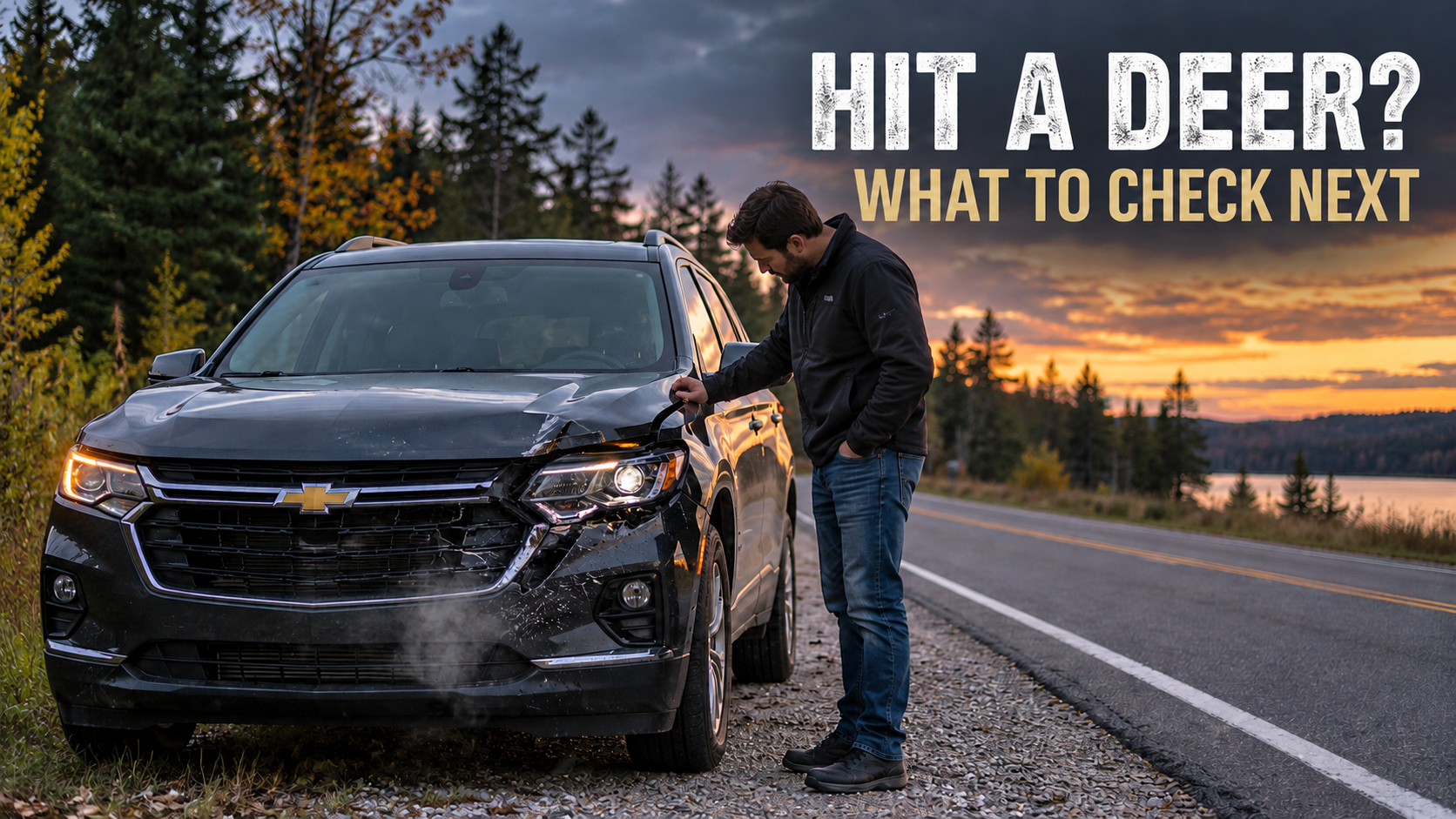
Hitting a deer can happen in an instant. One moment the road is clear, and the next you may be dealing with a damaged bumper, broken headlight, bent hood, leaking fluid, or warning lights on the dashboard.
Deer collisions are especially relevant for drivers throughout Northern Michigan. Michigan State Police notes that deer-vehicle crashes occur throughout the year, with deer particularly active during the spring and fall months.
The important thing to remember after hitting a deer is that the damage you can see may not be the only damage the vehicle sustained.
A collision involving the front of a vehicle can affect body panels, lighting, cooling components, suspension, sensors, cameras, wiring, and structural components behind the bumper.
Here is what to check after a deer collision, when you should avoid driving the vehicle, and why a professional collision inspection may be worthwhile even when the exterior damage appears relatively minor.
First: Make Sure Everyone Is Safe
Immediately after a deer collision, your first priority should be the safety of yourself, your passengers, and other drivers.
Michigan State Police recommends turning on your emergency flashers and moving the vehicle to the shoulder if it can be moved safely.
If anyone is injured, the vehicle is blocking traffic, another vehicle was involved, or the scene creates an immediate hazard, contact emergency services.
Michigan State Police also advises drivers to stay away from the deer. An injured or frightened animal can be unpredictable and potentially dangerous.
Once you are in a safe location, you can begin evaluating the vehicle.
1. Check the Front Bumper and Grille
The front bumper and grille are often the first parts of a vehicle to make contact with a deer.
Obvious damage may include:
- Cracked bumper covers
- Broken grille sections
- Loose trim
- Dents
- Missing pieces
- Paint damage
But the visible bumper cover is only the exterior portion of the system.
Behind it may be reinforcement structures, brackets, energy-absorbing materials, sensors, wiring, and other components that cannot be evaluated just by looking at the outside of the vehicle.
2. Look Closely at the Headlights
A deer collision frequently damages headlights, daytime running lights, fog lights, turn signals, or the brackets holding those components in place.
Even if a headlight still turns on, inspect it for:
- Cracked lenses
- Moisture inside the housing
- Loose mounting points
- Misalignment
- Broken tabs
- Lights pointing in the wrong direction
Modern lighting assemblies can contain much more than a simple bulb, so damage to the housing, mounting system, electronics, or wiring may require additional evaluation.
3. Check the Hood and Hood Latch
If the deer contacted the grille or front edge of the hood, check whether the hood appears properly aligned.
Look for:
- A larger gap on one side
- A hood that sits higher than normal
- Difficulty opening or closing it
- A damaged latch
- Bent hinges
- Movement after the hood is closed
A hood that is not properly secured can become a serious safety concern while driving.
If you are uncertain whether the hood is fully latched, do not continue driving until it has been checked.
4. Look Under the Vehicle for Fluid Leaks
One of the most important things to inspect after a front-end collision is the ground beneath the vehicle.
Depending on where the impact occurred, a deer collision can potentially damage components associated with:
- Engine coolant
- Transmission fluid
- Engine oil
- Windshield washer fluid
- Air-conditioning components
A fresh puddle, steady drip, steam, or unfamiliar fluid underneath the front of the vehicle deserves attention.
If the vehicle is leaking coolant, overheating, or losing another critical fluid, continuing to drive could cause additional damage.
5. Check the Radiator and Cooling System
The radiator, condenser, cooling fans, hoses, and related components sit near the front of many vehicles, which makes them vulnerable during a deer collision.
Damage is not always immediately obvious from outside the vehicle.
Watch for signs such as:
- Rising engine temperature
- Coolant warning messages
- Steam from the front of the vehicle
- Visible coolant leakage
- A sweet smell
- Cooling fans making unusual noises
If the engine temperature rises above normal after the collision, stop driving and allow the vehicle to be evaluated.
Never open a hot pressurized cooling system.
6. Pay Attention to the Steering
After the collision, notice whether the steering feels different.
Warning signs can include:
- The vehicle pulling left or right
- An off-center steering wheel
- New vibration
- Steering that feels unusually heavy
- Steering that feels loose
- New clicking, clunking, or rubbing sounds
A deer impact can sometimes affect a wheel, tire, steering component, suspension component, or vehicle alignment.
If the vehicle no longer feels predictable or stable, it should be inspected before you continue driving normally.
7. Inspect the Tires and Wheels
A deer can strike more than the center of the vehicle.
If the impact occurred near a front corner, inspect the nearby tire and wheel for:
- Sidewall cuts
- Bulges
- Loss of tire pressure
- Bent or cracked wheels
- Rubbing
- Loose bodywork near the tire
A damaged tire or wheel can become a significant safety concern, particularly at highway speeds.
8. Watch for Dashboard Warning Lights
Modern vehicles monitor many systems electronically, and a collision can trigger warning lights even when the vehicle appears driveable.
Pay attention to warnings involving:
- Airbags
- Forward collision systems
- Parking sensors
- Lane-assistance features
- Engine temperature
- Check engine light
- ABS or traction control
- Tire pressure
Do not automatically clear or ignore a warning light after a collision. The warning may be related to a component that was damaged or moved during the impact.
9. Check Cameras, Radar Sensors, and Driver-Assistance Systems
One of the biggest differences between repairing an older vehicle and repairing a modern vehicle is the amount of technology built into the exterior.
Depending on the vehicle, the front bumper, grille, windshield, mirrors, and other areas may contain equipment used by advanced driver-assistance systems.
These systems may support features such as:
- Forward collision alert
- Automatic emergency braking
- Adaptive cruise control
- Lane-keeping assistance
- Surround-view cameras
- Parking assistance
A sensor does not necessarily have to look broken to be affected.
If a bumper, grille, camera, sensor bracket, suspension component, or related part has moved, manufacturer repair procedures may require scanning, aiming, programming, or calibration during the repair process.
10. Look for Damage Behind the Bumper
This is where deer-collision damage can become deceptive.
A flexible bumper cover may partially return to its original shape after an impact, leaving relatively minor-looking exterior damage.
Behind that bumper, however, there may be damage to:
- Bumper reinforcement
- Mounting brackets
- Energy absorbers
- Radiator supports
- Cooling components
- Sensor brackets
- Wiring
- Structural mounting points
Some of that damage may not be visible until portions of the vehicle are disassembled.
Can a Deer Collision Cause Hidden Damage?
Yes.
Hidden damage is one of the main reasons a professional collision inspection can be valuable after an impact.
What initially looks like a damaged grille and headlight could also involve brackets, supports, cooling components, wiring, sensors, or structure farther behind the visible damage.
The severity of hidden damage depends on vehicle speed, the size of the animal, where the vehicle was struck, the angle of the impact, and the design of the vehicle.
Can You Drive Your Car After Hitting a Deer?
Sometimes a vehicle can still be safely moved after a deer collision, but you should not assume that simply because the engine starts.
Michigan State Police specifically advises motorists not to assume a vehicle is safe to drive after a deer crash.
Before driving, look for obvious signs of damage and pay attention to how the vehicle behaves.
You should be particularly cautious if you notice:
- Fluid leaking
- Overheating
- Damaged tires or wheels
- Loose body panels
- A hood that will not latch securely
- Broken headlights or signals
- Steering problems
- Severe vibration
- Smoke or steam
- Major warning lights
- Parts rubbing against a tire
If you are uncertain whether the vehicle is safe, arranging for a tow is preferable to risking additional damage or a second incident.
Should You Call the Police After Hitting a Deer in Michigan?
Michigan State Police advises motorists involved in a deer-vehicle crash to call police and report the incident.
Be prepared to provide:
- Your location
- Whether anyone is injured
- Whether another vehicle was involved
- Whether the deer appears alive or dead
- Whether the animal is blocking the road
After the scene is safe, take photographs of the vehicle, roadway, and damage when possible.
Take Photos Before the Vehicle Is Repaired
Photographs can be helpful during the insurance and collision-repair process.
If it is safe to do so, photograph:
- The entire front of the vehicle
- Close-ups of damaged areas
- Broken lights
- Damaged wheels or tires
- Fluid underneath the vehicle
- The accident location
- Debris on the roadway
It can also be helpful to photograph the vehicle from several angles instead of documenting only the most obvious damaged panel.
Contact Your Insurance Company
After reporting the incident and documenting the vehicle, contact your insurance company to discuss the claim.
Coverage depends on your individual policy, so ask your insurer how animal collisions are handled under your coverage, what deductible may apply, and what documentation is needed.
Keep your claim number, police report information, photographs, towing paperwork, estimates, and other documents together throughout the repair process.
Why Can the Repair Estimate Change?
An initial estimate is often based primarily on damage that can be seen without fully disassembling the vehicle.
Once damaged panels, bumper covers, lighting assemblies, and other components are removed, technicians may discover additional collision-related damage.
Examples can include:
- Broken brackets
- Damaged reinforcement
- Cooling-system damage
- Wiring damage
- Sensor damage
- Structural damage
When additional damage is identified, the repair facility may prepare a supplemental estimate documenting the additional repairs needed.
Will a Deer Collision Require ADAS Calibration?
It depends on the vehicle and where the damage occurred.
Advanced driver-assistance systems can use cameras, radar, ultrasonic sensors, steering information, and other vehicle inputs.
If collision repairs involve components associated with those systems, manufacturer procedures may require scanning or calibration.
The requirement should be determined using the repair procedures for the specific vehicle rather than simply assuming calibration is or is not necessary.
What About Damage to the Windshield or Roof?
Not every deer collision stays below the hood.
At higher speeds, the animal may contact the hood, windshield, roof, or pillars.
Windshield or upper-body damage can create additional safety concerns and may involve:
- Broken glass
- Roof damage
- Pillar damage
- Windshield-mounted cameras
- Weather sealing
- Interior trim
Significant windshield or roof damage should be professionally evaluated before the vehicle is returned to normal use.
What Our Collision Team Recommends After a Deer Hit
At Voice Motor Sales, we recommend looking beyond the obvious dent or broken headlight after a deer collision.
Pay attention to the entire vehicle and make note of anything that changed after the impact.
Helpful information to provide when having the vehicle inspected includes:
- Approximately how fast you were traveling
- Which part of the vehicle hit the deer
- Whether the vehicle continued driving normally afterward
- Whether any warning lights appeared
- Whether you noticed fluid leaking
- Whether the steering changed
- Whether any new noises began
- Whether the hood, lights, or doors operate differently
Those details can help provide context when the vehicle is being evaluated for visible and hidden collision damage.
Deer Collisions in Northern Michigan
Deer are part of everyday driving throughout Northern Michigan.
Wooded areas, agricultural fields, rural highways, two-lane roads, and changing daylight conditions can all bring vehicles and wildlife into close proximity.
Michigan State Police reports that deer are particularly active from October through December and again from April through June, although deer-vehicle collisions can occur at any time of year.
In 2024 alone, more than 58,000 deer-vehicle crashes were reported across Michigan.
Drivers around Kalkaska, Traverse City, Grayling, Cadillac, Lake City, Mancelona, and other Northern Michigan communities should remain especially alert around wooded areas, field edges, and places where deer crossing signs are posted.
You can find additional deer-vehicle safety information through the Michigan State Police Office of Highway Safety Planning .
If You See One Deer, Watch for More
Michigan State Police advises drivers that deer frequently travel together.
If one deer crosses the roadway, slow down and remain alert because another may follow.
If a collision becomes unavoidable, Michigan authorities advise motorists to brake firmly, remain in their lane, maintain control of the steering wheel, and avoid swerving into another lane or roadside object.
Have Deer Collision Damage? Contact Voice Motor Sales
If your vehicle has been damaged in a deer collision, the Collision Center at Voice Motor Sales in Kalkaska can help evaluate the damage and explain the next steps in the repair process.
Visit our Voice Motor Sales Collision & Body Shop page to learn more about collision repair, or contact Voice Motor Sales with questions about your vehicle.
You can also call the Voice Motor Sales Body Shop at 231-258-9178.
Collision Repair Resources
Frequently Asked Questions About Deer Collision Damage
Can hitting a deer cause hidden damage?
Yes. A deer collision can damage components behind the bumper or exterior body panels, including reinforcement, brackets, cooling components, wiring, sensors, suspension parts, and structural mounting points.
Can I drive my car after hitting a deer?
It depends on the damage. Do not assume the vehicle is safe simply because it starts. Check for fluid leaks, overheating, steering problems, damaged tires, loose body panels, broken lighting, warning lights, or other significant changes. If you are uncertain, have the vehicle towed and inspected.
Should I call the police after hitting a deer in Michigan?
Michigan State Police advises motorists to call police to report a deer-vehicle crash. Be prepared to provide your location, information about any injuries, whether other vehicles were involved, and whether the deer is blocking the roadway.
Should I approach an injured deer after an accident?
No. Michigan State Police advises motorists to stay away from the deer. A wounded or frightened animal may be unpredictable and dangerous.
Can a deer collision damage the radiator?
Yes. Front-end impacts can potentially damage the radiator, condenser, cooling fans, hoses, or related components. Coolant leaks, steam, overheating, or a rising temperature gauge are reasons to stop driving and have the vehicle inspected.
Can hitting a deer affect cameras or safety sensors?
Yes. Modern vehicles may have cameras, radar, parking sensors, and other driver-assistance equipment mounted in or near areas commonly damaged in a deer collision. Repairs may require scanning, aiming, programming, or calibration depending on the vehicle and manufacturer procedures.
Why did the body shop estimate increase after my vehicle was taken apart?
Some collision damage cannot be seen until exterior panels and damaged components are removed. When additional collision-related damage is discovered during disassembly, a supplemental estimate may be prepared for the additional work.
Where can I get deer collision damage repaired near Kalkaska, Michigan?
Voice Motor Sales operates a Collision & Body Shop in Kalkaska, Michigan, serving drivers from Kalkaska and surrounding Northern Michigan communities. The Body Shop can be reached at 231-258-9178.