



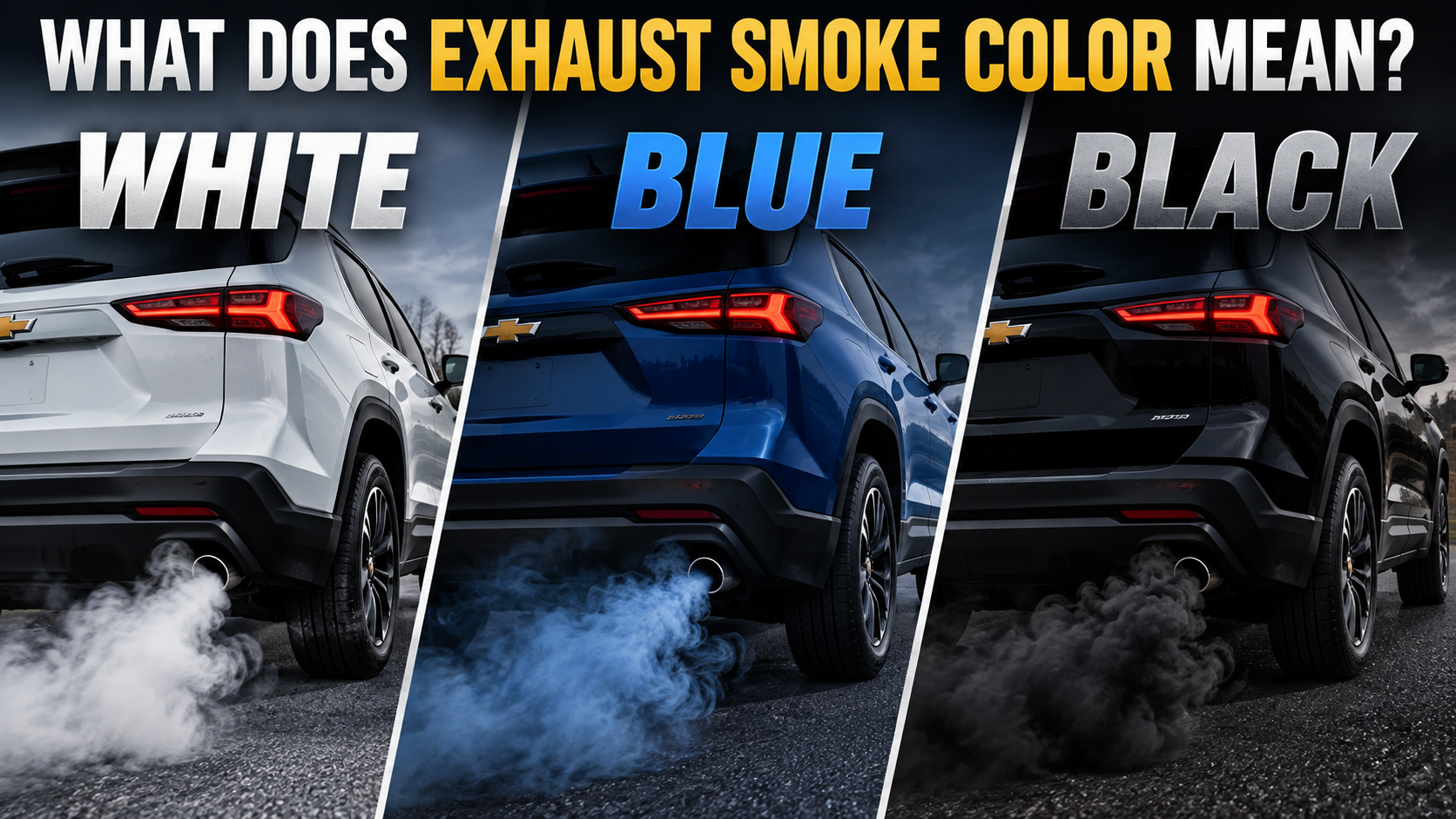
What Does Exhaust Smoke Color Mean? White vs. Blue vs. Black Smoke
Reviewed by the Voice Motor Sales Service Department in Kalkaska, Michigan
Seeing smoke coming from your vehicle's exhaust can be concerning, but the color, timing, and amount of smoke can provide useful clues about what may be happening.
Some exhaust vapor is completely normal, especially during a cold Northern Michigan morning. Other colors or persistent smoke can point toward engine, cooling-system, fuel-system, or emissions-related concerns that should be inspected.
The three colors drivers most commonly notice are white, blue, and black exhaust smoke. Each can mean something different, and the conditions under which the smoke appears are just as important as the color itself.
Is Smoke From the Exhaust Always a Problem?
No. What looks like smoke is sometimes simply water vapor.
Combustion naturally produces moisture, and condensation can collect inside the exhaust system while a vehicle is parked. When the engine is started, especially in cold weather, that moisture can appear as thin white vapor from the tailpipe.
Normal condensation usually:
- Appears shortly after a cold start
- Looks thin or wispy
- Becomes less noticeable as the vehicle warms up
- Is more visible in cold or humid weather
Thick, persistent smoke that continues after the engine reaches operating temperature is more likely to deserve attention.
What Does White Exhaust Smoke Mean?
White exhaust can mean different things depending on whether you are seeing light vapor or dense, persistent smoke.
Thin White Vapor During a Cold Start
Light white vapor on a cold morning is often normal condensation.
This is especially common during fall and winter in Northern Michigan, when the exhaust system can cool significantly while a vehicle is parked overnight.
If the vapor disappears as the engine warms up and the vehicle is otherwise operating normally, it may simply be moisture leaving the exhaust system.
Thick White Smoke That Does Not Go Away
Persistent white exhaust smoke can be more concerning, particularly if it is accompanied by coolant loss, overheating, rough running, or an unusual sweet smell.
In some situations, coolant may be entering an area of the engine where it should not be and reaching the combustion process.
Possible causes can include problems involving:
- Head gaskets
- Cylinder heads
- Engine sealing surfaces
- Internal cooling-system components
The exact cause depends on the engine and vehicle, so persistent white smoke should be diagnosed rather than assuming a particular component has failed.
White Smoke Plus Overheating: What Should You Do?
If thick white exhaust smoke appears along with an overheating warning, high temperature gauge reading, low coolant warning, or visible coolant loss, continuing to drive may cause additional engine damage.
Find a safe place to stop and shut the vehicle off when appropriate. Do not remove a hot cooling-system cap, because the system may be under pressure and can cause serious burns.
If you are unsure whether the vehicle is safe to drive, contact a qualified service facility or arrange for the vehicle to be towed.
What Does Blue Exhaust Smoke Mean?
Blue or blue-gray exhaust smoke commonly indicates that engine oil is entering the combustion process and being burned.
Oil is supposed to lubricate internal engine components. It is not supposed to be consumed in significant amounts during combustion.
Possible causes of blue smoke can involve:
- Worn piston rings
- Valve seals
- Valve guides
- Turbocharger components on turbocharged engines
- Crankcase ventilation system problems
- Other internal engine concerns
The timing of the smoke can provide additional clues.
Blue Smoke When Starting the Vehicle
If a brief puff of blue smoke appears after the vehicle has been sitting for several hours, oil may be entering the combustion chamber while the engine is off.
Certain valve-sealing or internal-engine conditions can produce this type of symptom.
A technician will usually consider when the smoke occurs, how long it lasts, oil consumption, mileage, engine design, and other symptoms before determining the cause.
Blue Smoke During Acceleration
Blue smoke that becomes noticeable during acceleration or under load can sometimes point toward a different type of oil-consumption issue.
The vehicle may also show:
- Falling engine oil level
- Oil-fouled spark plugs
- Reduced engine performance
- Check engine light illumination
- Increased oil consumption between oil changes
If you are regularly adding engine oil between services, mention that to your technician. The rate of oil consumption can be an important diagnostic detail.
Can You Drive With Blue Exhaust Smoke?
A small amount of occasional smoke does not tell you how serious the underlying problem is, but persistent blue smoke should not be ignored.
Burning oil can lower the engine oil level and, depending on the cause, may contribute to additional engine or emissions-system problems.
Check the engine oil level according to the procedure in your owner's manual and arrange for the vehicle to be inspected if the smoke continues.
If the oil-pressure warning light comes on, the engine develops loud mechanical noises, or the oil level is dangerously low, stop driving and seek assistance.
What Does Black Exhaust Smoke Mean?
Black exhaust smoke often indicates that the engine is receiving or burning more fuel than it should for the amount of air entering the engine.
This condition is sometimes described as the engine running rich.
Possible causes can involve:
- Fuel injectors
- Airflow sensors
- Air intake restrictions
- Fuel-pressure problems
- Engine-control sensors
- Ignition or combustion issues
- Electronic control problems
Diesel engines operate differently from gasoline engines, so the cause and significance of dark exhaust can vary by vehicle and operating condition.
Why Is Black Smoke a Problem?
Excess fuel can affect more than what comes out of the tailpipe.
Depending on the cause, you may also notice:
- Reduced fuel economy
- Rough running
- Loss of power
- Fuel smell
- Check engine light illumination
- Hard starting
- Deposits on spark plugs or exhaust components
Modern engine-management systems make many adjustments automatically, so visible black smoke from a modern vehicle is worth investigating if it persists.
What About Gray Exhaust Smoke?
Drivers sometimes describe exhaust as gray rather than clearly blue, white, or black.
Gray smoke can be difficult to diagnose by color alone because lighting conditions and exhaust temperature can change how smoke appears.
Depending on the vehicle, gray smoke could be associated with oil consumption, fuel mixture, turbocharger issues, emissions-system operation, or another concern.
Rather than relying only on color, pay attention to when the smoke appears and whether there are other symptoms.
When Does the Exhaust Smoke Appear?
One of the most useful things you can tell a technician is when the smoke occurs.
Make a note if the smoke appears:
- Only during a cold start
- After the vehicle has been sitting overnight
- While idling
- During acceleration
- Under heavy load
- While towing
- After the engine becomes warm
- During deceleration
- All the time
These details can help narrow the diagnostic process considerably.
What Does the Smoke Smell Like?
Odor can sometimes provide another useful clue.
For example:
- Sweet smell: May be associated with engine coolant.
- Burning oil smell: May accompany oil consumption or an external oil leak reaching a hot surface.
- Strong fuel smell: May indicate a fuel or combustion concern.
Do not intentionally breathe exhaust fumes to identify an odor. Vehicle exhaust contains gases that can be hazardous.
Exhaust Smoke vs. Smoke From Under the Hood
Where the smoke is coming from matters.
Smoke from the tailpipe is different from smoke or steam coming from underneath the hood.
Under-hood smoke or steam could be caused by:
- Coolant leaking onto a hot engine component
- Oil leaking onto the exhaust
- An overheating engine
- Electrical problems
- Belt or accessory issues
- Other fluid leaks
If you see significant smoke from under the hood, notice a burning smell, or see signs of overheating, pull over safely and shut the vehicle off when appropriate.
Can a Check Engine Light Come On With Exhaust Smoke?
Yes. Many conditions that cause unusual exhaust smoke can also trigger diagnostic trouble codes and illuminate the check engine light.
If you have both visible exhaust smoke and a check engine light, the combination of symptoms can provide useful diagnostic information.
You can learn more in our guide: Check Engine Light On? What It Means and What to Do Next .
Does Reading a Trouble Code Tell You Why the Vehicle Is Smoking?
Not necessarily.
A diagnostic code identifies a system or condition the vehicle has detected, but it does not always identify the exact failed component.
Proper diagnosis may involve:
- Scanning diagnostic trouble codes
- Reviewing live vehicle data
- Checking fluid levels
- Inspecting the engine and cooling system
- Checking fuel and air-delivery systems
- Performing pressure or leak tests
- Evaluating engine mechanical condition
- Following manufacturer diagnostic procedures
The smoke color is a clue—not a complete diagnosis by itself.
What Our Service Team Recommends
At Voice Motor Sales, we recommend paying attention to the complete set of symptoms rather than trying to diagnose a vehicle based on exhaust color alone.
If you notice unusual exhaust smoke, make note of:
- The color of the smoke
- Whether it is thin or thick
- When it appears
- How long it lasts
- Whether the engine is hot or cold
- Whether the vehicle is losing coolant
- Whether the vehicle is using engine oil
- Any unusual smells
- Any loss of power or rough running
- Whether the check engine light is on
- Whether the temperature gauge is higher than normal
If possible, a photo or short video of the smoke can also be useful, particularly when the symptom only happens occasionally.
Exhaust Smoke and Northern Michigan Weather
Northern Michigan weather can make exhaust vapor especially noticeable during fall and winter.
On cold mornings, it is common to see white water vapor from the tailpipe while a vehicle warms up. This can become more noticeable as temperatures fall.
The key difference is usually whether the vapor disappears as the engine reaches operating temperature.
Drivers around Kalkaska, Traverse City, Grayling, Cadillac, Lake City, Mancelona, and surrounding communities should not automatically assume every white cloud on a cold morning indicates an engine problem.
Persistent smoke, fluid loss, overheating, warning lights, unusual smells, or drivability problems are much stronger reasons to have the vehicle inspected.
When Should You Stop Driving?
Some exhaust-smoke conditions deserve more immediate attention.
Consider stopping the vehicle and seeking assistance if you notice:
- Heavy or rapidly increasing smoke
- Engine overheating
- Low oil-pressure warning
- Significant coolant loss
- Severe engine shaking or misfiring
- Major loss of power
- Loud knocking or mechanical noises
- Strong fuel smell
- Smoke entering the passenger compartment
- Any condition that makes the vehicle feel unsafe to drive
When you are unsure whether continuing to drive could cause damage or create a safety concern, contacting a qualified service facility before proceeding is the safer choice.
Have Unusual Exhaust Smoke? Visit Voice Motor Sales
If your vehicle is producing persistent white, blue, black, or unusual exhaust smoke, the service team at Voice Motor Sales in Kalkaska can help determine what is causing it.
The goal is to diagnose the underlying condition rather than replace parts based only on the appearance of the exhaust.
Visit the Voice Motor Sales Service Department to learn more about our service capabilities, or schedule a service appointment online .
If you are unsure whether your vehicle should be driven, contact Voice Motor Sales before your visit.
Related Vehicle Service Resources
Frequently Asked Questions About Exhaust Smoke
Why is white smoke coming from my exhaust?
Thin white vapor during a cold start is often normal condensation. Thick white smoke that continues after the engine warms up, especially when accompanied by coolant loss or overheating, may indicate a cooling-system or internal-engine concern that should be diagnosed.
Why is blue smoke coming from my exhaust?
Blue or blue-gray exhaust smoke commonly indicates that engine oil is entering the combustion process. Possible causes can involve valve seals, piston rings, turbocharger components, crankcase ventilation, or other engine issues.
Why is black smoke coming from my exhaust?
Black smoke often indicates that the engine is burning more fuel than expected for the amount of air entering the engine. Fuel-system, airflow, sensor, ignition, or engine-control problems are among the possible causes.
Is white exhaust smoke normal in cold weather?
Light white vapor that appears during a cold start and disappears as the vehicle warms up is commonly caused by condensation and can be normal, especially during cold Michigan weather.
Can I drive with blue smoke coming from my exhaust?
Persistent blue smoke should be inspected because it can indicate engine oil consumption. Check the engine oil level according to your owner's manual and stop driving if the oil-pressure warning appears, the oil level becomes dangerously low, or the engine develops serious mechanical symptoms.
Does white exhaust smoke mean I have a bad head gasket?
Not necessarily. A head-gasket problem is one possible cause of persistent white exhaust smoke, but other conditions can produce similar symptoms. Proper diagnosis is necessary before determining which component is responsible.
Why does my car smoke only when I first start it?
The answer depends on the color and duration of the smoke. White vapor during a cold start may simply be condensation, while a brief blue puff can sometimes indicate oil entering the combustion chamber while the vehicle is parked.
Where can I have exhaust smoke diagnosed near Kalkaska, Michigan?
Drivers can schedule diagnostic service with the Voice Motor Sales Service Department in Kalkaska, Michigan. Voice Motor Sales serves drivers throughout Kalkaska and surrounding Northern Michigan communities.